
Thank you for continuing to subscribe to our monthly newsletter. We hope you continue to find the content useful and we welcome any feedback or suggestions on topics that you would like to see covered in future editions of the newsletter.
FAS technical advice line: 03000 200 301
- Key dates to be aware of
- Countryside Stewardship and Environmental Stewardship revenue claim deadlines
- Upcoming Events
- SFI26: scheme information now available
- Capital Grants 2026: Guidance now available
- Funded poultry biosecurity vet visits now available
- Planning your fertiliser and nutrient use – latest guidance and government consultation
- Environmental Impact Assessment (EIA) (Agriculture) regulations
- Updates from the Environment Agency’s Water Resources team
- Supporting More Sustainable Outdoor Pig Farming
- Updates from the Defra Farming blog and industry announcements
- New guidance to help businesses prepare for EU trade agreement
- Unlocking private investment to bring new innovations to farms faster
- Watch: lessons from farmers growing herbal leys in the Derbyshire White Peak
- ADAS launches free planning tool for making informed crop rotation decisions
- Projects making a difference for England's farms
- Groups of farmers in England can now apply for a water screening study
- Government consultation on fertiliser and food tariff suspensions: have your say
- Rural Payments Agency: Updates and Guidance
- New RPA Podcast on IPM
- How can we help you?
- Stay up to date with us
The new Farming Innovation Investor Partnerships competition is now open for applications. The application deadline is 17 June.
Visit the Innovation Funding Service on GOV.UK to read the guidance and apply.
In case you missed them
You must not cut or trim a hedgerow that is covered by the Hedgerow management rules between 1 March and 31 August. You must not cause or permit another person to cut or trim such a hedgerow.
Further details, including situations where exemptions apply, can be found on GOV.UK.
The burning season for heather, rough grass, bracken, gorse or vaccinium is:
• 1 October to 15 April in upland areas
• 1 November to 31 March in other areas.
(GOV.UK)
If your farmland is located within a Nitrate Vulnerable Zone (NVZ), by 30th April each year you must make a record of:
- the numbers and type of livestock you kept in buildings or on hard standing during the previous slurry/manure storage period
- the dates for the start and end of use and locations of any field sites you use for storing solid manure.
You do not need to record the start and end dates for your use of field sites separately if you record them on your risk map. You must keep these records for 5 years. (GOV.UK)
For more details about the information provided in the key dates table, visit the Rules for Farmers and Land Managers and the relevant pages of GOV.UK.
Countryside Stewardship and Environmental Stewardship revenue claim deadlines
The deadline for submitting your 2026 Countryside Stewardship or Environmental Stewardship claim without reduction was 11.59pm on 15 May.
If you missed this deadline, you still have until 11.59pm on 1 September 2026 to submit a claim, but a reduction will be applied to the value of your claim. The later you submit it, the greater the reduction.
The reductions will be applied in the following way:
| Date the RPA receive your claim | Reduction applied to claim value |
|---|---|
| On or before 15 May | No reduction – full value paid |
| Between 16 May and 31 May | 5% reduction |
| Between 1 June and 30 June | 10% reduction |
| Between 1 July and 1 September | 25% reduction |
| After 1 September or not received at all | 100% reduction – no claim paid |
Further detail can be found on the Rural Payments blog.
Upcoming Events

SFI26: Scheme information now available
Near-final scheme information for this year's Sustainable Farming Incentive offer (SFI26) is now available on GOV.UK.
The Sustainable Farming Incentive 2026 offer (SFI26) will have 2 application windows, with the first window (‘Window 1’) to open from 30th June 2026 for two groups:
- Small farms
- Farms without an existing environmental land management (elm) revenue agreement
The second window will open in September 2026 for all farmers and land managers.
Initial SFI26 scheme information for Window 1 applicants
The SFI26 scheme information published June 2nd includes near final versions of:
- the terms and conditions which apply to all SFI26 agreements
- the scheme rules, which explain the mandatory requirements set in the SFI26 terms and conditions
- the requirements for each SFI26 action which are available on the ‘Find funding for land or farms’ tool on GOV.UK (or the HTML print version) – this means you can now review the actions available and consider which may work for your farm business
- guidance to help you apply for, and manage, your SFI26 agreement
Defra are publishing this as near final versions to allow for final checks, with the intention to publish final versions in mid-June before applications open.
If you qualify as a small farm, you may find it helpful to view the map of popular SFI actions by region. This shows the most common actions chosen by mixed/arable and grassland farms up to 50 hectares already in SFI agreements.
Further information can be found on the Defra Farming Blog.
Read the technical article “Don’t miss out on SFI funding: Check your eligibility and land details" for guidance from the RPA on preparing for your application.
Capital Grants 2026: guidance now available
Guidance for the 2026 Capital Grants offer is now available on GOV.UK.
Capital Grants help farmers and land managers pay for environmental improvements that support food production, improve water and air quality, support nature, and help farms become more resilient.

A total of £225 million will be invested through Capital Grants this year to help farmers and land managers carry out environmental improvements across England.
Applications open in July, with funding available for a variety of capital items to support hedgerow and tree planting, restore boundaries, improve natural flood management, and support better air and water quality.
Read the Defra blog article here.
Funded poultry biosecurity vet visits now available
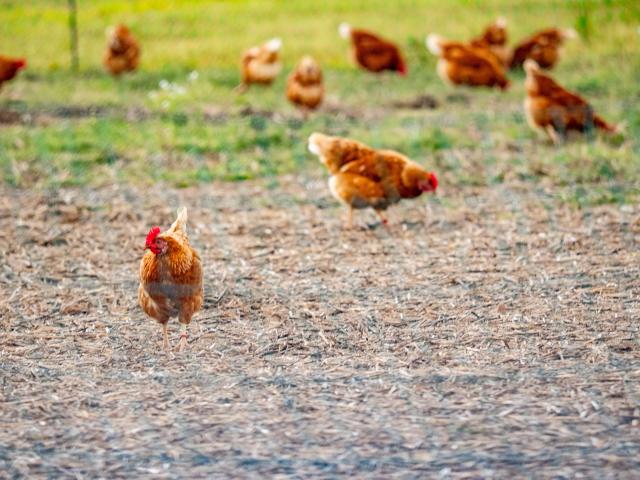
Defra has announced the introduction of funded Poultry Biosecurity Reviews as part of the Animal Health and Welfare Pathway.
A Poultry Biosecurity Review is a funded vet visit designed to give you practical, site-specific advice based on how your business works.
What the review covers
To be eligible, you must:
- be responsible for the day-to-day care of the birds
- have a Single Business Identifier (SBI)
- have a registered County Parish Holding (CPH) in England
You must meet at least one of the following minimum flock sizes per CPH:
- 1,000 laying hens
- 1,000 meat chickens
- 1,000 breeder chickens (including pullets)
- 500 ducks
- 500 geese
- 500 turkeys
You can apply for a review for each eligible site.
You can choose your own vet, arrange the visit at a time that works for you and pay them as usual, then claim the money back through the scheme.
The vet will:
- look at biosecurity risks on your site
- identify where changes could reduce disease risk
- give tailored advice you can act on
- provide a written report for future reference
You’ll receive £430 per review to help cover the cost of the visit.
You can apply through the Poultry Biosecurity Review service.
All funded visits must be completed by 31 December 2028, and claims must be submitted by 31 March 2029.
Find out more in the Defra webinar on 18 June at 11am.
At the webinar you can learn more about the review. You’ll also have the opportunity to ask questions before applying.
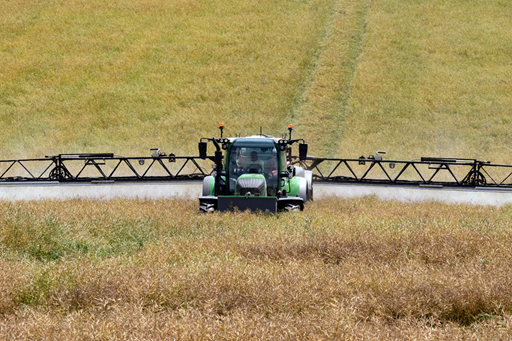
Although fertiliser supply remains stable, higher prices and market volatility are making it harder for farmers to plan and budget. Defra has now published a new blog with practical guidance to help farmers and land managers plan fertiliser and nutrient use more effectively.
This latest update builds on feedback from a recent fertiliser survey, where many farmers said rising and unpredictable prices have led them to buy and apply less fertiliser. It offers useful insights to help you review your current approach and prepare for the season ahead.
Visit the Defra Farming Blog for the latest guidance and available tools to help you plan to use nutrients more efficiently, reduce reliance on artificial fertilisers and improve resilience to global shocks.
The Government has opened a consultation on a new package of tariff suspensions. Responses from farmers and agricultural stakeholders will inform whether fertiliser tariff suspensions are included in the final package.
The consultation closes at 23:59 on 24 June 2026 - submit your contributions here.
Environmental Impact Assessment (EIA) (Agriculture) regulations
Improved guidance on when you may need a screening decision for agri-environment schemes (including Environmental Land Management (ELM) schemes).
The way you manage your land may change when you enter, change or leave an agri-environment scheme.
Scheme actions to create or restore habitats may include activities that increase the productivity of uncultivated land or a semi-natural area for agriculture. Capital items may be used to restructure rural land.
Improved guidance on when you may need a EIA screening decision has been produced and is effective immediately.
Although the rules have not changed, the improved guidance will make them clearer by:
- Explaining when you may need a screening decision at each stage of your scheme agreement.
- Giving practical examples of changes that may need a screening decision
- Explaining specific rules and exceptions - for example, for priority habitats or SFI agreement holders.
This will help you meet the requirements of the EIA (Agriculture) regulations more easily.
Protecting uncultivated land and semi-natural areas from damage
EIA (Agriculture) regulations protect land in England from damage caused by activities that
- Increase the productivity for agriculture of uncultivated land
- Increase the productivity for agriculture of Semi-Natural Areas (SNAs)
- Restructure rural land
Uncultivated land is land that has not been cultivated in the past 15 years by physical or chemical means.
SNAs include priority habitats, heritage or archaeological features and all land within the boundary of protected landscapes. They can include land that is cultivated.
If you are not sure if an area is semi-natural or whether land is cultivated, read the full guidance on when you may need a screening decision or contact Natural England for advice.
Contact Natural England
Environmental Impact Assessment (EIA) (Agriculture) Unit
- Email eia.england@naturalengland.org.uk
- Freephone 0800 028 2140
The Environment Agency’s updated prospects for irrigation across England in 2026 are GOOD to MODERATE.
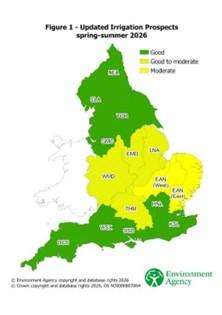
A wet winter has helped improve the water resources situation and as of March 2026, all areas of England have returned to normal status.
Recently drier and settled conditions became more established during March, especially across southern, central and eastern England. The settled weather has extended into April and May and it has been very dry particularly across the east and south east.
Soil moisture deficits are high, on par with last year in the eastern and south east areas, and drier than last year in the south west. Groundwater levels generally remain high but river flows are decreasing.
Please read the full report here: Updated prospects for irrigation – area forecast 2026 | Farming Advice Service and keep up to date with water situation reports at Water situation reports for England - GOV.UK
Looking to improve your water resilience? LRO screening study applications open in June
A new round of Local Resource Option (LRO) Screening Study applications opens on 25 May 2026 and close on 5 July 2026.
These studies are open to small groups of farmers or businesses - typically 2 to 15 - who come together to strengthen their water resilience by applying for a government-funded, specialist-led evaluation of future water resource scheme options in their local area.
You can find out more information and how to apply here: How to apply for a local water resources options screening study
Through the LRO programme, you will receive:
- A consultant-led assessment of your group’s local water challenges
- Practical, costed options to improve your water resilience
- The chance to collaborate with neighbouring farms and stakeholders
Over the past two years, more than 170 farms across five regions in England took part in the programme, which identified a wide range of local solutions and received strong positive feedback. You can now view case studies from the previous LRO projects on the EA Water Hub.
To stay informed and be notified when new guidance and updates are released, be sure to follow the EA Water Hub page.
New agricultural water resources guidance
As part of regional water resources planning work for agriculture the following England wide content has been produced by the Regional Water Resources Groups.
Water Resources West have published a guidance booklet with practical advice on setting up a Water Abstractor Group, drought planning for livestock farms including a water audit tool, and lessons from the drought of 2025.
Whilst Water Resources East partnered in developing Reservoir planning guidance booklets with UKIA, Cranfield, FFIA, and Suffolk Natural Landscapes, which although they contain case studies from the East have content applicable across England.
Water Resources North will soon publish a Smart Agricultural Water Resources Toolkit.
Agriculture — Water Resources West
Water Resources East and UKIA websites are both hosting the new Reservoir planning guidance booklets.
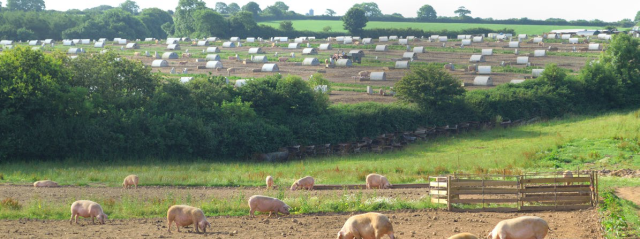
Natural England and Ricardo are working together to support outdoor pig farmers in reducing the environmental impacts of outdoor pig production. A package of practical resources has been developed, now available through the Farming Advice Service, to help farmers improve environmental outcomes while maintaining productive systems.
These resources include:
- Outdoor Pig Farming guidance pages
- A video showcasing the experience and on‑farm activities of award‑winning outdoor pig farmer Mike Durrant
- Opportunity to join our new Outdoor Pig Community Group - The Root & Wallow
Coming soon:
- An economic analysis tool, which will be published later this year to help those in the outdoor pig sector assess the financial implications of different mitigation measures.
- Three case studies featuring two farmers and one food company, sharing their experiences of outdoor pig farming and approaches to managing environmental impacts.
To find out more and access the Outdoor Pig Farming support resources,
visit the FAS Outdoor Pig Farming pages.

Defra regularly updates the Farming blog. Please subscribe to the blog to ensure you receive all the latest news.
New guidance to help businesses prepare for EU trade agreement
Defra has published new guidance on the sanitary and phytosanitary (SPS) agreement with the European Union to help businesses understand what the agreement could mean in practice and the steps they may need to take to prepare.
The guidance covers:
- which businesses and sectors could be affected by the agreement
- the areas currently expected to be in scope, including food safety, plant health and animal welfare
- areas where the UK may continue to keep its own rules
- how Defra is working with businesses to support preparations
- what businesses may need to know about digital systems
- potential changes to processes such as certification, paperwork and border checks
- how businesses can stay informed as negotiations progress
The guidance also includes information for specific sectors and businesses including:
- food manufacturing, processing and standards
- genetic technologies sector
- logistics, hauliers and customs agents
- organics sector
- veterinary sector
- horticulture sector
Unlocking private investment to bring new innovations to farms faster
Defra have announced a further £5 million round of the Farming Innovation Programme (FIP)'s Investor Partnership competition, helping agri-tech businesses to bring brilliant farming innovations to market for farmers to benefit from.
This competition will use £5 million in Defra funding to attract at least a further £10 million of private sector investment, helping small and medium Agri-Tech enterprises to accelerate innovative new products.
It’s part of the Government's Industrial Strategy commitment to spend at least £200 million on agricultural innovation up to 2030, solidifying Britain as a global leader in Agri-Tech and driving growth across our rural communities.
Projects making a difference for England's farms
Funding from the 2025 Investor Partnership competition is set to unlock more than £40 million in private investment for Agri-Tech growth, supporting up to 12 new projects, including the following two:
Upcycled Plant Power (UPP) is developing a new way to turn vegetable waste, such as broccoli stems, into high-quality plant-based protein from bread to protein powder. By using parts of crops that are currently grown but thrown away, this is both providing farmers with additional income and reducing waste. In addition, this offers a low-waste alternative to imported protein sources.
Growing rapidly since establishment in 2021, Rhizocore Technologies harnesses the power of native fungi pellets to plant in the soil with tree saplings to help them thrive. This sustainable solution is boosting tree survival by more than 20% and growth by up to 13x after the first year, supporting livelihoods in commercial forestry and restoring biodiversity through native woodland creation projects.
Find out more about the Investor Partnership competition in the Defra Farming Blog post.
Watch: lessons from farmers growing herbal leys in the Derbyshire White Peak
Natural England's CSF published a blog post and a range of video guides exploring lessons-learned from a group of farmers in the Derbyshire White Peak growing herbal leys in improved grassland systems.
Read the article and watch the videos here.
ADAS launches free planning tool for making informed crop rotation decisions
A new free-to-use crop rotation planning tool, developed by ADAS as part of the Nitrogen Climate Smart (NCS) project, helps growers weigh up the environmental and financial benefits of different crop rotation choices.
Based on data from hundreds of crops in the Yield Enhancement Network (YEN), the Crop Planner tool estimates how a change to a crop rotation will impact farm greenhouse gas (GHG) emissions, gross margins, nitrogen balance, and overall energy and protein output.
The tool aims is to help growers assess the benefits and trade-offs before making any cropping changes, such as introducing a new crop type or altering the frequency a crop is grown.
New Farming Innovation Investor Partnerships competition now open
A new Farming Innovation Investor Partnerships competition is now open for applications. £5 million in government grant funding is available to attract private investment and support businesses developing near-commercial, on-farm innovations.
Applications are open now and close 17 June.
Groups of farmers in England can now apply for a water screening study
Applications are now open for the Environment Agency’s Local Resource Option (LRO) water screening studies, supporting farm groups to strengthen long‑term water resilience.
These studies help neighbouring farms assess practical options for improving water supply reliability, including reservoirs, high‑flow abstraction, water rights trading, efficiency measures, and nature‑based solutions.
Groups must nominate a lead applicant to coordinate information across participating farms. If selected, specialist consultants will visit each site to understand current and future water needs, assess local water resources, and identify the most suitable options. Each group receives a report outlining potential yields, indicative costs and recommended next steps.
Applications are welcome from farm groups and mixed groups - including local non‑agricultural businesses. The deadline for applications is 23:59 on Sunday 5 July 2026.
These studies have already supported over 170 farms nationwide, helping farmers collaborate, secure funding and plan long‑term water management.
Visit the Defra Farming Blog if you’d like support applying or to learn more about what you can apply for.
Government consultation on fertiliser and food tariff suspensions: have your say
The Government has opened a consultation on a new package of tariff suspensions. Responses from farmers and agricultural stakeholders will inform whether fertiliser tariff suspensions are included in the final package.
The conflict in the Middle East has placed considerable upward pressure on fertiliser prices, with significant consequences for agricultural input costs. In response, the Government is seeking views on whether suspending tariffs on certain fertilisers would provide meaningful support to farmers. This consultation represents a direct opportunity for the sector to inform government decision-making on this issue.
The call for input on fertiliser forms part of a broader consultation on a package of ‘cost-of-living’ tariff suspensions, which encompasses a range of food and household goods. In line with previous commitments, the products selected for tariff cuts consider domestic production and food security, and does not include produce that we produce significant amounts of in the UK.
This follows the first package of tariff suspensions announced in April, which reduced import costs on a range of everyday consumer staples. The broader package is expected to deliver a benefit to consumers of more than £150 million a year, with tariffs on affected products reduced to 0% until the end of 2028.
The consultation closes at 23:59 on 24 June 2026
New RPA podcast on IPM
In the 15th episode of the RPA Podcast, the team discuss the topic of Integrated Pest Management (IPM) with Dr Sam Cook and PhD student Charlotte Robb from Rothamsted Research, who've been researching natural pest control and how farmers can reduce their reliance on pesticides.
Click here to listen to the podcast in your web browser, or search RPA in your usual podcast platform.
If you are interested in Integrated Pest Management (IPM), you can also read the FAS technical article Getting Started with Integrated Pest Management on the FAS webpages.
Rural Payments Agency Blog
To stay up to date with the latest information and updates from the Rural Payments Agency (RPA), sign up to the RPA Blog.
You can also listen to the RPA Podcast, which has been launched to help farmers, landowners and rural communities keep up to date with the latest news from the RPA. You can also follow the RPA on social media:
- X @ruralpay
- Facebook: facebook.com/RuralPaymentsAgency
- YouTube: Rural Payments Agency
- Instagram: ruralpay.
Stay up to date with the Sustainable Farming Incentive (SFI) blog posts here.
The Rural Payments Agency has launched a series of 'How to' videos to help farmers prepare for a farm visit and meet your regulatory requirements.
The video series of practical guides covers everything from identification visits to getting set up online.

Free and confidential advice
The FAS is funded by the Department for Environment, Food and Rural Affairs (Defra). We provide free, confidential advice to help farmers and land managers in England understand and meet the legal requirements in English law around certain farming activities to protect people, livestock and the environment. We update the farming sector on relevant government farming policy that is applicable in England and on the actions that can be taken to help farmers comply with the relevant regulations. Our newsletter also provides articles on topics that are complementary to farming regulation, such as practices that benefit the wider environment and wellbeing support.
Our website hosts our previous newsletters, as well as technical articles and webinars that cover various topics in more detail.
Contacting the advice line: Farmers requiring telephone advice can contact the FAS technical advice line on 03000 200 301, Monday to Friday, between 08:30 and 17:00. The Rural Services Helpline provides a single number for all FAS, Rural Payments Agency (RPA), Animal and Plant Health Agency, Natural England and Forestry enquiries.
You can also email enquiries to advice@farmingadviceservice.org.uk. Our helpline team aims to respond to all telephone and email enquiries within one working day.