

Thank you for continuing to subscribe to our monthly newsletter. We hope you continue to find the content useful and we welcome any feedback or suggestions on topics that you would like to see covered in future editions of the newsletter.
FAS technical advice line: 03000 200 301
- Key dates to be aware of
- FAS Webinars
- New FAS Technical Articles
- Contacting the Rural Payments Agency about Grants
- The 2026 Capital Grants offer
- Apply now for the Farming Equipment and Technology Fund (FETF) 2026
- Have your say: proposals for livestock health and welfare vet visits
- Advice, Guidance and Support for Reservoirs Act Compliance
- Abstraction licensing: How to comply with your hands off condition
- Winter and all year water abstraction returns
- Local Resource Option Screening Study Applications to Open this Spring
- British Farming Awards 2026
- Managing livestock and public access
- Updates from the Farming blog and industry announcements
- New guidance to support Long-term Farm Business Tenancies
- Businesses urged to take simple steps for smoother trade with the EU
- New Avian influenza vaccine trials to begin in England
- Making Tax Digital for Income Tax – Less than a week to go
- Defra publishes new Land Use Framework
- Government maps out vision for long-term land use to boost growth, food security and nature restoration
- New fertiliser regulations will back British farmers and cut pollution
- Know the signs: Protect your livestock from foot and mouth disease
- Details of Defra's Capital Grants in 2026 published
- Farming and food leaders unite to drive growth in British agriculture
- Rural Payments Agency: Updates and Guidance
- How can we help you?
- Stay up to date with us
FAS Bank Holiday Closure
Please be aware that from 5pm on Thursday 2nd April until 8:30am on Tuesday 7th April, our helpline service will be closed for the Easter bank holidays. You can still email us with any queries to advice@farmingadviceservice.org.uk and a member of the team will get back to you as soon as possible on 7th April.
If you hold a winter or all-year-round water abstraction licence (authorising abstraction outside the period April to October), the Environment Agency will ask you to submit your record of actual abstraction. You have 28 days to submit your record of actual abstraction to the Environment Agency. (GOV.UK)
This is the end of the burning season for heather, rough grass, bracken, gorse or vaccinium.
The burning season is from:
- 1 October to 15 April in upland areas
- 1 November to 31 March in other areas. (GOV.UK)
Round 6 of the Accelerating Development of Practices and Technologies (ADOPT) Fund closes to new applications at 11:00am on Wednesday 8 April 2026. (GOV.UK)
Round 7 of the ADOPT Facilitator Support Grant closes on Wednesday 15 April 2026 at 11:00am (GOV.UK)
Applications for the Farming Equipment and Technology Fund (FETF) close at midday on 28 April 2026
If your farmland is located within a Nitrate Vulnerable Zone (NVZ), by 30th April each year you must make a record of:
- the numbers and type of livestock you kept in buildings or on hard standing during the previous slurry/manure storage period
- the dates for the start and end of use and locations of any field sites you use for storing solid manure.
You do not need to record the start and end dates for your use of field sites separately if you record them on your risk map. You must keep these records for 5 years. (GOV.UK)
In case you missed them
A 12-week consultation began on 24 February, seeking views on the future of the Animal Health & Welfare Review. Submit your views now.
For any land located in an NVZ:
- You must not spread more than 30m3/ha of slurry or 8 tonnes/ha of poultry manure in a single application from the end of the closed period until the end of February.
- You must allow at least 3 weeks between each individual application.
IMPORTANT: Farming Rules for Water still apply and there must be agronomic justification for applying fertiliser to land. (NVZ Guidance)
You must not cut or trim a hedgerow that is covered by the Hedgerow management rules between 1 March and 31 August. You must not cause or permit another person to cut or trim such a hedgerow.
Further details, including situations where exemptions apply, can be found on GOV.UK.
For more details about the information provided in the key dates table, visit the Rules for Farmers and Land Managers and the relevant pages of GOV.UK.
FAS Webinar – Nutrient Management Planning – what’s new for 2026
Following the launch of the new Defra funded online Nutrient Management Planning Tool in February, we spoke to expert farm consultant and FACTS & BASIS qualified advisor Mel Holloway about approaches to nutrient management planning for the new planting year. Also featuring an update from CSF on support available from their teams.
Catch up with the webinar here
With fertilizer prices influenced by the current tensions in the Middle East, AHDB remind farmers of two responsive tools they can use when nutrient management planning for the coming months;
Cost benefit calculator for nitrogen fertiliser use on grassland | AHDB
Nitrogen fertiliser adjustment calculator for cereals and oilseeds | AHDB
In case you missed it... FAS Webinar – Livestock farming update recording
On February 26th the Farming Advice Service team were joined by colleagues from Defra, the Rural Payments Agency and Catchment Sensitive Farming for an online update on systems and support for livestock farmers, including:
- Reporting cattle movements online using the Cattle Tracing System (CTS)
- An update from the Livestock Information Transformation Programme (LITP)
- Latest news from the Livestock Information Service (LIS) for sheep, goats and deer reporting
- What’s new with the Animal Health and Welfare Pathway
- An update from CSF on support available from their teams
The recording of the webinar is now available to watch online, along with the links shared during the presentation and a copy of the slide deck.
New FAS Technical Articles
We have 3 new Technical Articles now available on the FAS webpages;

Contacting the Rural Payments Agency about Grants
The Rural Payments Agency has simplified how you can contact them regarding grants.
The RPA have provided a list of email addresses that are no longer in use, which have been replaced with ruralpayments@defra.gov.uk.
You can read the full list and instructions on how to make contact on their blog here; We’re simplifying how you contact us about some of our grants
The 2026 Capital Grants offer
Through Capital Grants in 2026, £225 million will be available to support farmers, land managers and rural businesses to deliver environmental improvements across England.
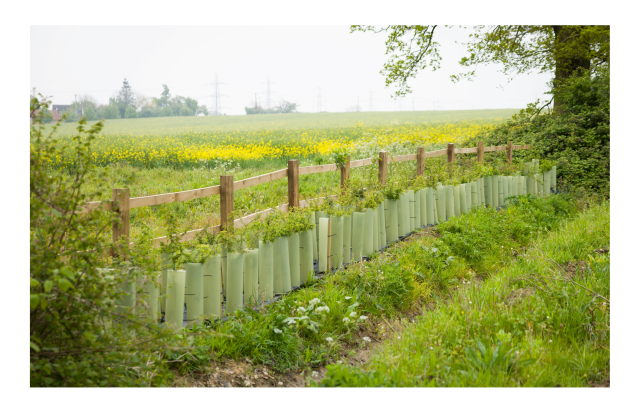
When the offer opens in July, Capital Grants will fund a range of items from hedgerow and tree planting through to works that improve water quality.
Defra are currently finalising the items that will be available in this year's offer. The full list will be published in May alongside the guidance ahead of the offer opening.
In the same way as last year’s offer, the items will be organised into the following groups:
- Boundaries, trees and orchards
- Water quality
- Air quality
- Natural flood management
- Assessments
- Improvements
Funding limits will continue to apply to 4 of the 6 groups in the offer:
- £25,000 for the water quality, air quality, and natural flood management groups
- £35,000 for the boundaries, trees and orchards group.
Each application can include items from these groups up to the limit, plus items from the assessments or improvements group.
As in 2025, you can submit one application per Single Business Identifier (SBI) you manage.
Demand for last year’s offer was very high, and Defra expect strong interest again this year. Once the offer opens, they will share updates on the Defra Farming Blog as 25%, 50% and 75% of the funding is allocated.
24 items in the offer require CSF support. This support must be in place before the offer opens. You can request Catchment Sensitive Farming advice at any time by completing a request form and emailing it to your local team.
Farmers, growers and foresters across England can now apply for grants worth up to £25,000 to invest in machinery that can help businesses cut costs, improve productivity and protect profits.
The new round of the Farming Equipment and Technology Fund (FETF) makes £50 million available, under three themes - enhancing productivity, managing slurry, or improving animal health and welfare.
Applications for FETF opened on 17 March and close on 28 April at midday.
Last year, for example, Devon-based dairy farm Aplins Farm Ltd secured FETF funding from Defra to improve their slurry management. A Mobile Slurry Chopper Pump ensures their slurry mixture is uniform and easier to spread, maximising the value of this nutrient source as well as reducing the need for additional bought-in fertiliser. Hose is then run out by an Umbilical Hose Reeler, through which this slurry is pumped from storage directly to the applicator in the field, enabling efficient spreading over larger areas without the need for heavy tanker journeys across the field.
This is the final dedicated round of FETF, but support doesn’t end there. Defra will look at how best to combine the strongest elements of these grants from 2027, making it easier to apply and ensuring they target funding effectively.
From autonomous robots that precisely plant seeds in fields, to slurry separator systems that bring down reliance on expensive fertilisers, there are tools for everyone. Find out how to apply for FETF today by watching the recent webinar recording in this Defra Farming Blog post.
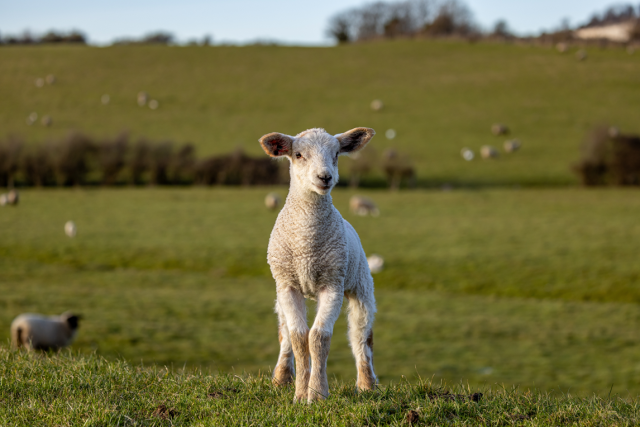
At this year’s NFU Conference, Defra launched a consultation on making vet visits mandatory for cattle, sheep and pig farmers in England. The government wants to hear your views, as these will be key to shaping the final policy.
The consultation covers proposals to introduce a new phase of the Animal Health and Welfare Pathway. Proposals are designed to help farmers and vets work more closely together to improve the health, welfare and biosecurity of livestock, because the best way to fight disease is to prevent it taking hold in the first place.
So far, the government have already funded over 11,500 vet-led reviews for cattle, sheep and pig keepers. The evidence from this is clear: early intervention works.
The proposals include an annual flock health plan for sheep and disease eradication programmes for Bovine Viral Diarrhoea (BVD) in cattle and Porcine Reproductive and Respiratory Syndrome (PRRS) in pigs. These measures aim to boost productivity, support more responsible use of medicines, and build resilience against future disease outbreaks.
The consultation is open until 11:59pm on 18 May 2026. Have your say on GOV.UK.
The Environment Agency’s Reservoir Regulation Team plays a key role in helping owners meet their legal duties under the Reservoirs Act 1975 (the Act). One way this is done is in relation to ‘Measures in the Interest of Safety’ (MIOS). These may appear in your ten‑year ‘Section 10’ report written by your inspecting engineer. Your inspecting engineer will include MIOS in their report if they think that work is necessary to ensure the continued safety and structural integrity of the reservoir in order to reduce the risk of an escape of water and protect the public downstream.
MIOS are enforceable requirements under the Act. Failure to complete them by the deadline specified by your inspecting engineer may result in enforcement action, as the Environment Agency has legal powers to intervene in the event of non-compliance. Each MIOS is assigned a due date for completion, and reservoir owners must appoint a Qualified Civil Engineer (QCE)—selected from the approved list on their website link below, to oversee, manage, and sign off the works https://www.gov.uk/government/publications/contact-details-of-engineers-on-the-all-reservoirs-panel
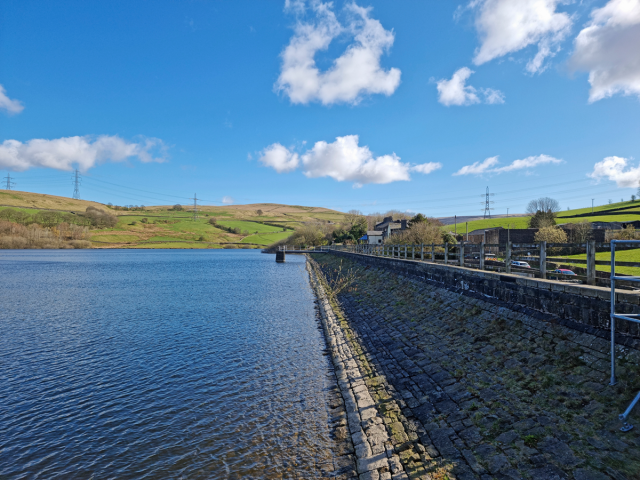
The EA's Reservoir Regulation team provides support throughout this process, offering guidance, advice, and reminders to help you stay on track. You may be assigned a Proactive Monitoring officer who will regularly request progress updates so the team can understand how the works are advancing and whether any obstacles have arisen. Sometimes delays are unavoidable—for example, ecological issues such as nesting birds or access problems.
If you have MIOS to complete at your reservoir, it is essential that a QCE is appointed promptly and that any necessary planning permission or permitting processes are started early. These steps, along with procurement and budgeting, can take considerable time. Starting them as soon as possible helps ensure deadlines are met and avoids unnecessary delays.
With early preparation and the right support, meeting your MIOS obligations becomes a more manageable and straightforward process.
Some abstractors hold a water abstraction licence with conditions that require they stop taking water to protect the rights of other water users and the environment when it’s dry. The Environment Agency manage these so-called ‘hands-off’ conditions by sending Water Abstraction Alerts to holders of licences with these conditions.
To continue receiving these alerts and comply with the ‘hands-off’ licence conditions, abstractors must tell their local Environment Agency team if their contact details have changed. Failure to do so could result in unauthorised abstraction and the Environment Agency taking action.

If you have any questions about the alerts, or need to update your contact details, please contact your local Environment Agency team via enquiries@environment-agency.gov.uk or email water_abstractiondigital@environment-agency.gov.uk.
If you hold an abstraction licence which authorises abstraction during the winter & all year period (the authorised period of abstraction does not fall wholly between 1 April to 31 October) you may need to report your water abstraction return for the twelve-month reporting period 1 April 2025 to 31 March 2026.
If you need to submit a return you will receive a notification from the Environment Agency at the end of March/beginning of April 2026.
You must submit your return by 28 April 2026.
You can submit your return online by registering with the Environment Agency’s online digital Service at: https://www.gov.uk/guidance/manage-your-water-abstraction-or-impoundment-licences-online.
If you already have an online account and have applied for and received a new licence, including a renewal of a licence which previously expired, since you last submitted a return, you will need to link the new licence to your account. You can do this by accessing your account and selecting the ‘add licence’ option.
If you had a licence which expired during the period 1 April 2025 to 31 March 2026 (inclusive) a return may still be requested. To submit the return, you will need to request a paper return form from the Agency rather than submitting online. You can contact the Agency on 03708 506 506 or at WR_Systems_Team@environment-agency.gov.uk.
If you have a Two Part Tariff (TPT) annual charge arrangement and do not submit a return, your second part charge will be calculated using the authorised quantity specified by your licence and the full annual charge will be payable even if you didn’t abstract any water (a nil return can be reported to the Environment Agency). A TPT Charge Arrangement can, subject to agreement by the Environment Agency, be applied to licences authorising abstraction for spray or trickle irrigation. If you are unsure whether you have a TPT charge arrangement please contact the Environment Agency, quoting your licence number in all correspondence, at WR_Systems_Team@environment-agency.gov.uk.
Local Resource Option Screening Study applications to open this Spring
Over the past two years, the Environment Agency has conducted Local Resource Option (LRO) screening studies with farmer groups across England. This government-funded initiative provided expert assessments of local water resources, helping farmers better understand and improve their water resilience.
The 2024/25 and 2025/26 programmes have proved very successful, identifying a wide range of LROs for 177 farms across five regions and receiving positive feedback from farmers and other stakeholders.
The EA are pleased to announce the relaunch of the LRO screening study fund, with plans for a new round of studies in the 2026/27 financial year. Applications will open this spring - stay tuned for details from Defra and the Environment Agency.
Submissions are now open for the 14th annual British Farming Awards, with the ceremony being held on Thursday 15th October in Birmingham.

This year there are 20 different categories, which you can enter yourself or nominate someone you know. The application form can be found here, with information on the entry process also available.
- Have you demonstrated great passion and resilience despite weather difficulties and/or industry barriers?
- Have you implemented practices on your farm to improve profitability, sustainability or animal welfare?
- Perhaps you have diversified successfully in a way that benefits your local community?
For more information and to see the 2025 winners, visit the website.
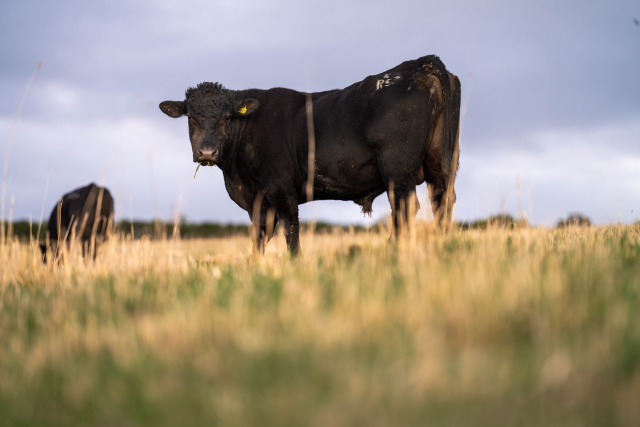
With the annual turnout of cattle well underway, and the Easter break approaching, more and more people will be visiting the countryside, so it is important, for yours and the public’s interest, to keep visitors as safe as possible on your farm by ensuring that risks to them from livestock are minimised.
This article briefly summarises the laws covering this areas and highlights sources of advice and guidance which might be useful to you when making decisions about stock management on your land.
Various pieces of legislation apply to land managers keeping livestock and other animals:
Legislation:
- In general, you have a legal duty of care under The Occupier’s Liability Act 1957 towards people visiting or crossing your land e.g., walking of public footpaths or on Open Access land. This duty also extends to people potentially trespassing (The Occupier’s Liability Act 1984).
- Under Section 3 of the Health and Safety at Work Act 1974 both employers and those who are self-employed (i.e., most farmers) have an obligation to ensure that people outside their employment, or work activities, are not exposed to unnecessary health and safety risks, which could include livestock management.
- Under The Animals Act 1971 the keeper of an animal owes a duty of care to prevent the animal from causing harm to others, whether this is a known dangerous species or a more domesticated breed that may sometimes cause harm - such as cattle. Under the Act, the keeper of an animal is strictly liable for any harm or damage which may have been caused by it, regardless of whether or not the keeper/ owner was at fault.
- Section 59 of the Wildlife & Countryside Act 1981 bans the keeping of bulls in fields crossed by a right of way, unless they are under the age of 10 months or not of a recognised dairy breed, provided they’re accompanied by cows or heifers. Recognised dairy breeds are: Ayrshire, British Friesian, British Holstein, Dairy Shorthorn, Guernsey, Jersey and Kerry.
Guidance:
- The Health and Safety Executive provides on-line guidance for farmers Cattle and public access in England and Wales (hse.gov.uk). This summarises your responsibilities and provides a checklist and advice on how to manage livestock and public access on your farm. It recommends trying to avoid keeping cattle, particularly with calves at foot, in fields with public access, but gives recommendations on what do if this is not practical.
- The Countryside Code for land managers gives advice on a range of subjects for farmers including public access and creating a safe farm environment, including cattle management
- The Countryside Code provides advice for people visiting the countryside on how to act responsibly and respect farmland and farm practices such as keeping dogs under control, closing gates, not starting fires etc.
- Farming and land-owner organisations also provide advice on your responsibilities and have advice on managing livestock in areas of public access.
- Livestock and public rights of way – what do I need to know?
- NFU gatepost signs: order your signs here – NFUonline
- Tips on staying legal with bulls and cows near footpaths - Farmers Weekly (fwi.co.uk)
- The Country Land Owners Association also provide guidance on public safety around livestock which is available to their members GN23-21 Livestock and Public Access in England and Wales
The Rural Payments Agency has launched a series of 'How to' videos to help farmers prepare for a farm visit and meet your regulatory requirements.
The video series of practical guides covers everything from identification visits to getting set up online.
Rural Payments Agency Blog
To stay up to date with the latest information and updates from the Rural Payments Agency (RPA), sign up to the RPA Blog.
You can also listen to the RPA Podcast, which has been launched to help farmers, landowners and rural communities keep up to date with the latest news from the RPA. You can also follow the RPA on social media:
- X @ruralpay
- Facebook: facebook.com/RuralPaymentsAgency
- YouTube: Rural Payments Agency
- Instagram: ruralpay.
Stay up to date with the Sustainable Farming Incentive (SFI) blog posts here.

Defra regularly updates the Farming blog. Please subscribe to the blog to ensure you receive all the latest news.
Businesses urged to take simple steps for smoother trade with the EU
On 9 March 2026, the Environment Secretary Emma Reynolds set out how UK exporters and importers are expected to benefit from a new Sanitary and Phytosanitary (SPS) agreement with the European Union.
The government is working toward a mid-2027 start date for the new agreement and wants businesses in the agri-food sector to start getting ready now. This includes those that do not currently trade with the EU.
The agreement will cut costs and red tape, making agrifood exports cheaper and easier and opening up opportunities for growth for food and farming businesses across the country who want to put British products back on European tables.
Since last May, the government has been engaging with businesses and trade associations to understand how the new deal could affect them. The government knows that some businesses require longer to adjust to the new arrangements and will work with them to ensure a smooth transition.
Detailed guidance will be published as negotiations progress to ensure farmers, processors, retailers and hauliers are ready to benefit from day one. More information on how to prepare is available on GOV.UK.
Food and farming businesses should prepare now. While negotiations continue, businesses can take these practical steps to get ready:
- Engage with your relevant trade body or industry association: They will be key partners in providing sector-specific guidance and many are already working with government to help members prepare.
- Engage with your supply chain: To understand any changes that may apply to them.
- Sign up to Defra email alerts for regular updates: To receive the latest information on negotiations, implementation timelines, and details of guidance and support available, businesses can sign up for Defra email alerts.
- Respond to the Call for Information: And share views on what support their business needs to prepare through the government’s Call for Information.
Detailed guidance will be published as negotiations progress to ensure businesses have the clarity they need.
Making Tax Digital for Income Tax – Less than a week to go
Making Tax Digital (MTD) for Income Tax goes live on 6 April 2026. With less than 1 week remaining until sole traders and landlords with a turnover of over ?50K will need to start using it, we are encouraging individuals to take action now.
To understand more about the new process, how it applies to you, choosing compatible software and how to sign up, visit Making Tax Digital for Income Tax.
What’s changing?
- From 6 April 2026, sole traders and landlords with turnover above £50,000 (based on 2024-2025 tax year) will need to start using Making Tax Digital for Income Tax.
- Individuals will need to keep digital records of their self-employment and property income and expenses, use software compatible with MTD to send quarterly updates to HMRC and to submit their Tax Return.
- MTD will then be rolled out to these individuals with turnover above £30,000 from April 2027 and £20,000 from April 2028.
Action: What you should do now
- Check if you’re affected – Look at your 2024-2025 tax return to work out your qualifying income from self-employment and property.
- Find out your start date – to see when you need to start using MTD, use our tool to check if you need to use the service and when you need to start.
- Choose your software - Find compatible software that works with Making Tax Digital (including free options for simple affairs). Research and select your preferred software that meets your individual needs.
- Start keeping digital records – Begin using your chosen software to digitally record your income and expenses relating to your business.
- Speak to your agent – If you have an accountant or tax agent, make sure they’re prepared and can access compatible software.
Check out Making Tax Digital for Income Tax for sole traders and landlords for a more detailed step by step on how to get ready.
Where to find more information
- Check MTD for Income Tax dates you need to know for a clear timeline of start dates, quarterly update deadlines, and self-assessment tax return deadlines.
- Check the new late submission and late payment penalties for information on the new penalties under Making Tax Digital for Income Tax.
- For further information and support, visit Help and Support for Making Tax Digital including webinars, videos, and support content for taxpayers, businesses and agents.
New fertiliser regulations will back British farmers and cut pollution
British farmers are set to benefit from access to new and innovative fertilising products which could reduce air, land and water pollution under new government proposals launched on 19 March.
The consultation and call for evidence set out plans to support innovation in the fertiliser sector, diversify supply, and strengthen the UK’s resilience to global market shocks.
The consultation will run for eight weeks, closing on Wednesday 13 May, with responses invited from farmers, manufacturers, environmental groups and wider industry.
The proposals will help to strengthen future fertiliser supply and protect the environment, as well as being more agile to enable new products to enter the market.
The new framework is intended to increase the use of recycled nutrients made by alternative technologies, cut pollution, and create opportunities for innovation and growth in the UK fertiliser sector.
The proposed reforms will also embed stronger environmental standards into fertiliser regulations and ensure labelling and marketing rules give users confidence that the products they buy are safe and effective.
The proposals form part of the government’s plan to work hand-in-hand with farmers and industry to put more homegrown food on people’s plates, grow the economy, and protect the countryside.
Current fertiliser prices
Expanding access to a wider range of fertiliser products and introducing a more flexible legislative framework will help strengthen supply and improve resilience in the long term.
Right now, this government is monitoring developments in the Middle East and the impacts on our food and farming sector, including rising fertiliser prices.
Ministers have taken action to support greater price transparency, raising industry concerns on price transparency with the Competitions and Market Authority (CMA) and asking the AHDB to report back on fertiliser and red diesel supply and use across agricultural sectors to support greater market transparency.
The CMA has confirmed it will work with government to identify and monitor sectors likely to be affected by price rises and disruption – including fertilisers – so they can respond swiftly to any evidence of harmful practices across the economy.
They continue to work with industry and farmers to understand any potential pressures and options to mitigate any immediate risks.
Farming and food leaders unite to drive growth in British agriculture
On Wednesday 25 March, senior leaders from farming, food, retail and hospitality met for the inaugural Farming & Food Partnership Board (FFPB). This marks an important moment for how government and industry will work together to support British agriculture and strengthen national security.
The joint government and industry board is building directly on Baroness Batters’ Farm Profitability Review, exploring how to increase homegrown food and drink sales to strengthen the nation’s supply chain, and the potential of new export markets to boost farming profitability. All with the mission to increase farming profitability, improve productivity, and drive a resilient food system.
Representatives from key organisations - including the Agriculture and Horticulture Development Board, Agricultural Industries Confederation, British Retail Consortium, Food & Drink Federation, Institute of Grocery Distribution, National Farmers’ Union and UK Hospitality - met to shape the Board’s mission, ways of working and the scope of Sector Growth Plans. Their input will guide future membership and direction.
The Board is focused on delivering tangible outcomes for the farming industry. Sector-groups will be responsible for producing Sector Growth Plans. These plans will identify bespoke recommendations that will deliver growth for each sector.
The Board has invited the Horticulture Expert Growers Group to work with the Fruit & Veg Coalition, and the Environmental Horticulture Group and immediately begin work on the first Sector Growth Plan for the horticultural sector. Work to scope the poultry plan will follow this summer.
The Board also agreed to look at creating specialist subgroups to address key industry challenges and deliver practical improvements for farm businesses.
Environment Secretary Emma Reynolds emphasised that this first meeting is “a major moment for British farming,” highlighting government’s commitment to boosting productivity, supporting innovation, driving growth and improving profitability across the sector.
Given rising diesel and fertiliser costs linked to the Iran war, the government continues to work closely with industry to support farmers, with the Environment Secretary having attended Cabinet briefings on Monday to coordinate the response. Ministers have raised concerns about potential price gouging with the Competition and Markets Authority and are clear that profiteering will not be tolerated.
Find out more about the first meeting of the Farming and Food Partnership Board.
New guidance to support Long-term Farm Business Tenancies
Recognising the benefits that longer agreements bring, the joint industry and government Farm Tenancy Forum has published new guidance to support landlords and tenants considering long-term Farm Business Tenancies.
The guidance helps both parties set clear expectations from the outset and will help build strong and productive landlord-tenant relationships.
Read more about Long-term Farm Business Tenancies and the new guidance.
New Avian influenza vaccine trials to begin in England
On 5 March, Defra announced the start of highly pathogenic avian influenza (HPAI) vaccine trials, in a major step forward in the fight against the disease. New trials will explore the potential for the latest vaccines, providing valuable insight into how well vaccines work in the field, how surveillance can be managed to retain trade and how vaccines can help manage the disease. Turkeys have been selected as a priority species for further research as they are highly susceptible to avian influenza.
Avian influenza outbreaks in the UK and Europe within the last few years have caused devastation for bird keepers on the frontline and the wider poultry sector. Annual outbreaks cost industry and the UK Government up to £174m each year. The disease has significantly impacted both captive and wild birds globally since 2020.
Stringent biosecurity remains the most effective tool to protect flocks and poultry businesses. All bird keepers should familiarise themselves with the steps they need to take to prevent bird flu and avoid any potential for it to spread. Remaining vigilant for signs of disease, and reporting this promptly, is the best way to keep birds safe.
The trials will last for 24 weeks and will provide insight into the final recommendations of the UK HPAI vaccination taskforce.
Read about the latest situation and check what zone you’re in and the rules you need to follow using the bird flu disease zone map.
Defra publishes new Land Use Framework
On 18 March Defra published England’s first Land Use Framework, which sets out a plan for managing the country’s finite land to ensure the nation’s long-term resilience. Read more here.
Government maps out vision for long-term land use to boost growth, food security and nature restoration
The government has published England’s first ever Land Use Framework – a plan for delivering food security and nature restoration alongside clean energy and new homes. It demonstrates that there is enough land to deliver the government’s objectives provided we use land more efficiently and for multiple benefits.
Based on the most advanced land use analysis ever undertaken, the Framework will support food security and national resilience, making a clear, long-term commitment to maintaining food production in England. At the same time, it will also support farmers to diversify and remain profitable in the face of extreme weather and market shocks.
The framework will safeguard our most productive agricultural land, provide clear and long-term plans for the farming sector, and target funding where it delivers the greatest benefit.
The Land Use Framework sets out how government will support farmers and food security across our land, including plans to:
- Maintain overall food production in England to underpin our future food security and drive economic growth.
- Publish updated land classification data and mapping that safeguards our best farmland for food production, with impacts of land use change on food security monitored through the UK Food Security Reports.
- Develop Sector Growth Plans, beginning with horticulture and poultry, to help improve productivity, profitability and resilience, through the government’s new Farming & Food Partnership Board.
- Bolster support for tenant farmers by reforming the Farm Tenancy Forum to give them a greater role in policy making.
- Simplify payment systems and digitise land data submissions to make it easier for farmers to work with Government on land use.
- Optimise incentives to deliver for nature and resilient food production.
- Encourage farmers to explore multifunctional land use by providing up to £50m for trialling the sustainable management lowland peat soils. There will also be flexibility for farmers creating agroforestry systems, allowing them to trial resilient farming approaches without being locked into permanent change.
- Launch a new Farmer Collaboration Fund with up to £30m for collaboration between farmers to support land use change activity, as announced at Oxford Farming Conference in January.
- Publish the Farming Roadmap, which will work together with the Land Use Framework and Environmental Improvement Plan to give the farming sector long-term certainty.
This comes as the Department for Energy Security and Net Zero announced (March 18) plans to cut red tape and allow farmers to install a single small onshore wind turbine without needing to apply for planning permission. This could cut energy bills, making it faster and cheaper to generate clean homegrown power on site, as part of the government delivering the clean power mission and protecting businesses against volatile fossil fuels markets.
Details of Defra's Capital Grants in 2026 published
Defra will open a new round of the main ELM Capital Grants offer in July 2026.
Capital Grants are payments that help cover the cost of one‑off investments on farms like tree planting, hedgerow restoration, measures that improve water quality, and natural flood management.
Funding will increase from £150 million last year to £225 million in 2026.
Find out more, including how to get ready to apply, in this Defra Farming Blog
Know the signs: Protect your livestock from foot and mouth disease
The UK Chief Veterinary Officer is urging livestock keepers to remain vigilant to the clinical signs of foot and mouth disease (FMD) following the confirmation of the disease in a cattle farm in Lesvos, Greece and ongoing outbreaks in Cyprus.
There are currently no cases in the UK. FMD poses no risk to humans or food safety, but is a highly contagious viral disease of cattle, sheep, pigs and other cloven-hoofed animals such as wild boar, deer, llamas, and alpacas.
Rigorous on farm biosecurity is vital to protect the health and welfare of animals and prevent the spread of animal disease including FMD. Livestock keepers are encouraged to remind employees that personal imports of meat and dairy products from FMD-susceptible animals into Great Britain are prohibited.
FMD is a notifiable disease and must be reported.
Clinical signs to be aware of vary depending on the species, but in cattle the main signs are sores and blisters on the feet, mouth and tongue with potentially a fever, lameness and a reluctance to feed. In sheep and pigs, signs tend to manifest with lameness with potential for blistering.
If you suspect foot and mouth disease in your animals, you must report it immediately to the Animal and Plant Health Agency by calling:
- 03000 200 301 in England
- 0300 303 8268 in Wales
- your local Field Services Office in Scotland

Free and confidential advice
The FAS is funded by the Department for Environment, Food and Rural Affairs (Defra). We provide free, confidential advice to help farmers and land managers in England understand and meet the legal requirements in English law around certain farming activities to protect people, livestock and the environment. We update the farming sector on relevant government farming policy that is applicable in England and on the actions that can be taken to help farmers comply with the relevant regulations. Our newsletter also provides articles on topics that are complementary to farming regulation, such as practices that benefit the wider environment and wellbeing support.
Our website hosts our previous newsletters, as well as technical articles and webinars that cover various topics in more detail.
Contacting the advice line: Farmers requiring telephone advice can contact the FAS technical advice line on 03000 200 301, Monday to Friday, between 08:30 and 17:00. The Rural Services Helpline provides a single number for all FAS, Rural Payments Agency (RPA), Animal and Plant Health Agency, Natural England and Forestry enquiries.
You can also email enquiries to advice@farmingadviceservice.org.uk. Our helpline team aims to respond to all telephone and email enquiries within one working day.