

Thank you for continuing to subscribe to our monthly newsletter. We hope you continue to find the content useful and we welcome any feedback or suggestions on topics that you would like to see covered in future editions of the newsletter.
FAS technical advice line: 03000 200 301
- Key dates to be aware of
- Upcoming Events
- FAS Webinar: Building Resilience on Farm: Practical Approaches to Navigating Change and Wellbeing
- Catch up on the FAS Webinar – AI in Agriculture: Practical Tools for Farmers and Advisors - now available to view on the FAS website
- Peace of mind: Financial Planning and Record Keeping
- Water Management Whatever the Weather
- New Countryside Stewardship Higher Tier opportunities now available
- Agricultural Supply Chain Adjudicator (ASCA) report on supporting fairer agricultural supply chains
- Summer water abstraction returns
- What the UK–EU SPS Agreement means for farming businesses
- Flood Action Campaign – be prepared for flooding
- Updates from the Forestry Commission
- Updates from the Defra Farming blog and industry announcements
- Helping farmers access water
- Fertiliser storage for the coming season
- Put trees to work on your farm
- Working together to support a stronger farming and food sector
- Boiler Upgrade Scheme
- Making Tax Digital for Income Tax: preparing for April 2027
- Defra announces plans for building a long-term vision for tenant farming
- One year as Commissioner for the Tenant Farming Sector
- Rural Payments Agency: Updates and guidance
- How can we help you?
- Stay up to date with us
If you hold a water abstraction licence, which authorises abstraction wholly within the months of April to October, you may need to report your water abstraction return for the twelve-month period from 1 November 2024 to 31 October 2025. If you need to submit a return, you will receive a notification from the EA at the end of October/beginning of November, and you have until 28 November to submit your return. GOV.UK
If you keep sheep and/or goats, you must carry out your annual count of the animals on your holding as of 1 December, enter this into your holding register and complete the inventory by 31 December. You will receive a letter in November which tells you what to do. (GOV.UK)
In case you missed them
If you hold a summer water abstraction licence (authorising abstraction wholly within the months of April to October), the Environment Agency will make actual abstraction return forms available to you from 31 October. You then have 28 days to send your readings to the Environment Agency. GOV.UK
You can burn heather, rough grass, bracken, gorse or vaccinium on land other than in upland areas from this date.
The burning season for land in upland areas began on 1 October. GOV.UK
You should apply online between 6 November and 31 December 2026 for a grassland derogation in 2027. Grassland derogations for livestock manure in nitrate vulnerable zones - GOV.UK
The Healthy Soils and Water for a Sustainable Environment funding competition opens. UK registered businesses can apply for a share of up to £28 million for soil, water and environmental management. This funding is from Farming Futures R&D Fund.
Upcoming Events
FAS Webinar: Practical Approaches to Navigating Change and Wellbeing
Join us on Thursday 17 December, 12:00-13:00, for our next webinar, Practical Approaches to Navigating Change and Wellbeing
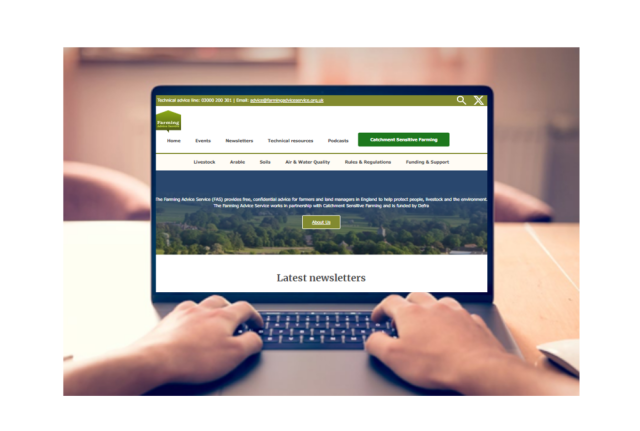
Join the latest webinar from the Farming Advice Service (FAS) to hear from Andrew Wells (Agricultural Consultant at Arable Alliance) on managing business pressures, navigating change and succession planning, and from Mark Thomas (Helpline Coordinator at The Farming Community Network) on common wellbeing challenges facing farmers, avoiding problems escalating into crisis, and the support available through FCN and others.
Register for your FREE place here
As tax deadlines approach, November can be a good time to review your finances and speak to advisors early if you're concerned about cashflow or upcoming payments.
Take a few minutes to check that payment details and contact information are up to date, be alert to cyber scams, and make sure important agreements, plans and key dates are written down and easily accessible. A simple checklist can reduce stress and uncertainty, supporting both your wellbeing and the resilience of your farm business.
For further guidance and support, visit the FAS Farm Continuity Planning webpage, which brings together trusted resources to support wellbeing, prepare for emergencies and strengthen business resilience.
Read our new resource Water Management Whatever the Weather includes the impact of drought and flooding, water management adaptation measures, Opportunities for collaborative, catchment-scale approaches, a Cambridgeshire case study, the Met Office Food Farming and Natural Environment Climate Service, and Met Office and CSF Climate Adaptation upcoming events
Take a look at the resource here for more information, signposting for support and advice, and upcoming events. Water Management Whatever the Weather | Farming Advice Service
Farmers and land managers can now express an interest in two new Countryside Stewardship Higher Tier (CSHT) single-focus agreements, covering traditional orchards and wet grassland for wintering waders and wildfowl.
Single-focus agreements offer a simplified route to funding for specific priority environmental actions. The new options build on agreements already available for species-rich grassland and scheduled monument management.
Before submitting an expression of interest, farmers and land managers should check the eligibility requirements and make sure their contact details and permissions are up to date in the Rural Payments service. A separate expression of interest is needed for each single-focus agreement topic.
Find out more about the available agreements, eligibility requirements and how to submit an expression of interest on this Defra Farming Blog.
Agricultural Supply Chain Adjudicator (ASCA) report on supporting fairer agricultural supply chains
On 3 November, the Agricultural Supply Chain Adjudicator (ASCA) published its second annual report, setting out its work to support fairer relationships between producers and processors.
In the report, Agricultural Supply Chain Adjudicator Richard Thompson set out the progress his office has made working with the dairy and pig sectors. This includes helping producers and processors understand their rights and responsibilities, promoting clearer contracts and better communication, and resolving contractual concerns before they escalate.
Farmers and producers are being encouraged to speak up about concerns with their supply contracts, they do not need to make a formal complaint to contact ASCA and can seek advice or raise concerns informally, in confidence or anonymously, helping issues to be addressed at an early stage.
To find out more about ASCA’s work, the issues being raised by farmers and its priorities for the year ahead, read Supporting fairer agricultural supply chains: our second annual report on the Defra Farming Blog.

If you hold an abstraction licence which authorises abstraction during summer period (the authorised period of abstraction falls wholly between 1 April to 31 October) you may need to report your water abstraction return for the 12-month reporting period, 1 November 2025 to 31 October 2026.
If you need to report a return you will receive a notification from the Environment Agency at the end of October/beginning of November 2026.
You will be asked to report your return by 28 November 2026.
In readiness for reporting your return. You can report your return online by registering with the Environment Agency’s online digital Service at: https://www.gov.uk/guidance/manage-your-water-abstraction-or-impoundment-licences-online.
If you already have an online account and have applied for and received a new licence, including a renewal of a licence which previously expired, since you last submitted a return, you will need to link the new licence to your account. You can do this by accessing your account and selecting the ‘add licence’ option.
If you had a licence which expired during the period 1 November 2025 to 31 October 2026 (inclusive) a return may still be requested. To report the return, you will need to request a paper return form from the Environment Agency rather than using your online account. You can contact the Agency on 03708 506 506 or at enquiries@environment-agency.gov.uk
If you have a Two Part Tariff (TPT) annual charge arrangement and do not submit a return your second part annual charge will be calculated using the authorised quantity specified by your licence and the full annual charge will be payable even if you didn’t abstract any water (a nil return can be reported to the Environment Agency). A TPT Charge Arrangement can, subject to agreement by the Environment Agency, be applied to licences authorising abstraction for spray or trickle irrigation. If you are unsure whether you have a TPT charge arrangement please contact the Environment Agency, quoting your licence number in all correspondence, at WR_Systems_Team@environment-agency.gov.uk.
The UK and EU have agreed to align on sanitary and phytosanitary (SPS) rules, which affect food and feed, plants, animals and other agrifood goods. This will affect farming businesses even if you do not import or export to the EU.
The Agreement will make agri-food trade easier by reducing paperwork and border checks for many businesses trading between the UK and EU and make it easier to move many goods from Great Britain to Northern Ireland.
It will also mean changes in everyday farming decisions, for all farmers, including those that do not trade. This will cover which pesticides and biocides you can use, how livestock are identified and traced, and the production standards and practices your business must follow. New rules will apply from 1 March 2028, with transition arrangements in some areas to give businesses time to adjust.
Following the UK–EU Summit on 20 November, Defra has published further information about what is changing and how you can prepare. Detailed practical guidance will follow as arrangements are confirmed, explaining which changes apply to your business, when they will take effect and what action you may need to take. In the meantime, for more detail you can visit the ‘SPS Agreement’ page https://www.gov.uk/government/topical-events/sps-agreement-what-is-changing for the latest guidance, and to attend an information webinar on the 30 November 2026 Events – UK–EU SPS food and drink agreement: What’s changing and what it means for your business
As we head into winter, make sure you are prepared for periods of wet weather and flooding. The new Flood Action campaign brings together practical information to help you check your flood risk, prepare for flooding and understand the actions you can take: https://floodaction.campaign.gov.uk/.
You can also sign up for flood warnings so you know when flooding may affect your area here: https://www.gov.uk/get-flood-warnings.
If you hold an abstraction licence, you should also be aware of Regulatory Position Statement (RPS) 300. RPS 300 sets out when the Environment Agency will allow you to abstract additional water outside the conditions of your abstraction licence during a flood event, provided you meet the requirements set out in the RPS. This could provide an opportunity to take additional water, for example to help refill your storage reservoir, when a flood warning is in place. Find out more and check the conditions before abstracting:
https://www.gov.uk/government/publications/abstracting-floodwater-outside-of-licence-conditions-during-flood-events-rps-300.

Protect your woodland archaeology
Do you have woodland on your land? The Forestry Commission have developed a new guide to help woodland owners identify and protect woodland archaeology. Woodlands preserve a rich legacy of the past and nearly all woodlands, ancient or modern, contain archaeological features in some form.
This new guide contains a short exploration of the type of archaeology which can be found in woodland, flow charts to help you identify archaeological features and a section on how to look after archaeology in woodland.
Putting trees to work on your farm
Many farmers are already planting trees in ways that complement food production, from integrating trees into grazing and arable systems through agroforestry to creating new woodland on less productive areas of land. Defra's latest blog explores the range of options available in more detail, including how farmers are already making trees work on their land.

Defra regularly updates the Farming blog. Please subscribe to the blog to ensure you receive all the latest news.
Helping farmers access water
Drought has put real pressure on farmers this year. From 1 October, the Environment Agency has made it easier for water abstractors to apply for long duration licences. Getting a long duration abstraction licence can be difficult, and this should make it simpler to invest in sustainable abstraction practices for the long term.
Changes were announced at the regular National Drought Group meeting, convening experts including from the Met Office, government and farming bodies. These changes aim to help farmers secure water for when they need it most.
Find out the full details in this Environment Agency blog post.
Put trees to work on your farm
Trees can play a practical role on a working farm. Providing shelter for livestock, making use of less productive land, and helping farms become more resilient to extreme weather and drought.
Livestock farmer Lee runs Tawell Farm near Lostwithiel in Cornwall. Much of the farm is exposed to the elements, and Lee is planting trees to create natural shelter and help protect his livestock from harsh weather.
The farm has been in his wife’s family for generations and is now passing to Lee and his wife. For Lee, planting trees is about making them part of a productive family farm, with benefits for his children and generations to come.
Government tree planting grants provide funding and expert support to help farmers work out what is right for their land and business. The grants offer an average of £19,000 per hectare for planting and establishment. *
For Lee, the process was more straightforward than he expected. An adviser worked closely with him on his plans and helped make changes along the way.
Read more about Lee’s experience and find out what tree planting grants and support could be available for your farm: gov.uk/tree-planting-grants
*The amount you will receive is subject to the specifics of your grant application.
Boiler Upgrade Scheme
If you’re thinking about getting a heat pump, check out the Boiler Upgrade Scheme (BUS).
The scheme helps property owners switch from fossil fuel heating to a cleaner heating system by providing money towards the upfront cost. Households are able to access the scheme and it isn’t means-tested.
You can get a £7,500 grant towards the cost and installation of an air or ground source heat pump. If your home is heated by oil or LPG, you could receive £9,000 towards a heat pump.
So, how do you get the grant?
It’s simpler than you might think. Start by finding an MCS-certified heat pump installer and getting a quote. It’s worth getting quotes from several installers so you can compare the costs and work proposed. Your chosen installer then applies to the Boiler Upgrade Scheme on your behalf.
You don’t have to pay the grant amount upfront and claim it back later. The installer must take the value of the government grant off your bill upfront, and you pay the remaining cost of the installation.
Ready to take the next step? Check whether you’re eligible and find out more about getting a heat pump through the Boiler Upgrade Scheme on the government’s Clean Energy website.
Making Tax Digital for Income Tax: preparing for April 2027
Making Tax Digital (MTD) for Income Tax is now legally required for sole traders and landlords with qualifying income above £50,000. MTD will then be rolled out to individuals with qualifying income above £30,000 from April 2027, and above £20,000 from April 2028.
If your qualifying income from self-employment and property is above £30,000, you may need to use MTD for Income Tax from April 2027. Although this may feel some time away, preparing early can help make the move to MTD smoother and give you more time to choose software, understand the new process, and get used to keeping digital records.
What can you do now?
If you think you may be legally required to use it from April 2027, there are some simple steps you can take now:
- Check if MTD for Income Tax will apply to you - Your qualifying income is based on your total turnover from self-employment and property. This means your income before expenses are deducted.
- Understand the key dates - MTD for Income Tax is already in place for those with turnover above £50,000. It will apply to those with turnover above £30,000 from April 2027, and above £20,000 from April 2028.
- Think about software early - You will need to use MTD compatible software to keep digital records and send quarterly updates to HMRC.
- Start building good record-keeping habits - Keeping records up to date throughout the year can make it easier to send quarterly updates when they are due.
- Speak to your agent - If you use an accountant, bookkeeper or tax agent, speak to them about what MTD for Income Tax means for you and how they can support you.
- Use HMRC guidance and support - GOV.UK has step-by-step guidance, videos and webinars to help you understand what you need to do and when.
The earlier you start preparing, the more time you'll have to understand your legal requirements, explore software options and make the transition at a pace that works for you.
For more information, visit Making Tax Digital for Income Tax.
You can also read the full press release here: Sole traders and landlords earning more than £30,000 urged to act now - GOV.UK
CLA conference - supporting farm growth and resilience
On Thursday 19 November the Secretary of State Dame Angela Eagle addressed the Country Land and Business Association (CLA) Rural Business Conference.
In her speech, the Secretary of State announced a package of measures that will help support growth in rural postcodes and put agriculture at the heart of our economy, security, and national identity.
This included opening up the Farming Innovation Programme (FIP) for applications, with up to £28 million available for innovative projects to improve soil health, water quality and environmental management in livestock and cropping systems on farms in England. This is the largest FIP competition since it launched in October 2021
Defra also published the scheme guidance for round 3 of the Water Management Grant, which will provide up to £15 million to support on-farm reservoirs and water tanks. Guidance and eligibility criteria have been published. The application window will open on 30 November 2026 and will close on 23 February at 11:59pm.
For more, read Defra’s Farming Blog posts that outline:
New funding for peatland restoration in England
Farmers, land managers and organisations involved in peatland restoration can find out more about the government’s new £25 million Peatland Restoration Grant Scheme.
The two-year scheme will help restore degraded peatlands across England, supporting healthier habitats, protecting carbon stores and improving resilience to wildfire.
Natural England will publish further details on the scheme later this month. Applications are expected to open in early 2027, with funding awards beginning in spring 2027.
Fertiliser storage for the coming season
As we enter the autumn, actions for farmers include ordering and then storing fertiliser in preparation for the coming season. It is timely to prepare yourself for the deliveries, and consider carefully where you will store your fertiliser, so that is safe, secure and so that it will not degrade before you have chance to apply it.
The guidance, best practice and regulations related to handling and storage of fertiliser will be very well known to you already, and AIC and NFU have frequently provided reminders and links to these over the years. The action you need to take depends on the type and quantities of fertiliser you will order and then store.
For convenience links are provided below to information and guidance so that you can safely store your supply:
Working together to support a stronger farming and food sector
The Farming and Food Partnership Board is bringing government and industry together to tackle barriers to growth and help build a more productive, profitable and resilient farming and food sector.
At its latest meeting, the Board agreed actions covering practical issues affecting farmers and growers, including planning barriers in the poultry sector, reducing overlapping audits in horticulture, supporting research and innovation, and making it easier to invest in on-farm water storage.
Find out more about the Board’s work and next steps in this Defra Farming Blog update.
Defra announces plans for building a long-term vision for tenant farming
Defra Secretary of State Dame Angela Eagle spoke to the Tenant Farmers Association (TFA) National Executive Committee on 11 November and reaffirmed her commitment to supporting tenant farmers.
Dame Eagle invited the tenanted sector to work with Defra to develop a shared plan to build a resilient, profitable and productive tenanted sector, as part of the government’s next step to deliver the Farming Roadmap.
The Defra announcement also confirmed that, over the coming months, Defra will work with industry representatives – including the TFA, CLA, NFU and professional bodies - to set up workshops with tenant farmers, landlords and advisors to gather views and ground their plan in lived experience.
Anyone interested in getting involved can contact Defra at agriculturaltenancies@defra.gov.uk and they will be in touch with a list of engagement opportunities in due course.
One year as Commissioner for the Tenant Farming Sector
The Commissioner for the Tenant Farming Sector, Alan Laidlaw, has reflected on his first year in the role and the issues being raised by tenants, landlords and advisers across England.
Over the past year, the Commissioner’s office has brought people together through regional roundtables, launched its first sector survey and shared insights with Defra to help inform policy. A key message from the first year is the importance of raising tenancy concerns early, before disagreements become more difficult to resolve.
The Commissioner also sets out priorities for the year ahead, including sharing more evidence, case studies and examples of good practice, and continuing to promote constructive relationships across the sector.
Read the Commissioner’s full update in this Defra Farming blog.
Help shape the long-term vision for tenant farming
Speaking to the Tenant Farmers Association (TFA) National Executive Committee on 11 November, Defra Secretary of State Dame Angela Eagle reaffirmed her commitment to supporting tenant farmers and invited the tenanted sector to work with Defra on a shared long-term vision for tenant farming.
The work aims to develop a shared plan to support a resilient, profitable and productive sector and will include workshops with tenant farmers, landlords and advisers. These will explore the barriers facing the sector, including around longer-term tenancies, investment, sustainable farming and access to government schemes.
You can find out more about the plans and how to get involved in Building a long-term vision for tenant farming on the Defra Farming Blog.

An update on how the RPA use remote monitoring to support environmental land management agreements
Since the last blog in November 2025 on How RPA uses remote monitoring technology to monitor environmental land management (ELM) agreements, the RPA team have continued to develop and improve this work.
You can read the full update on the blog here; An update on how we use remote monitoring to support environmental land management agreements – Rural payments
Sheep and goat tagging for keepers in England
If you keep sheep or goats in England, you need to correctly tag your animals and record their movements.
Watch the new RPA video below for an overview of the correct tags to use, the process for tagging your animals, and replacing any lost or damaged tags:
https://www.youtube.com/watch?v=_gmpDHZwQGI&feature=youtu.be
We recommend that you also watch the video What to expect from a sheep and goat visit.
Rural Payments Agency Blog
To stay up to date with the latest information and updates from the Rural Payments Agency (RPA), sign up to the RPA Blog.
You can also listen to the RPA Podcast, which has been launched to help farmers, landowners and rural communities keep up to date with the latest news from the RPA. You can also follow the RPA on social media:
- X @ruralpay
- Facebook: facebook.com/RuralPaymentsAgency
- YouTube: Rural Payments Agency
- Instagram: ruralpay.
Stay up to date with the Sustainable Farming Incentive (SFI) blog posts here.
The Rural Payments Agency has launched a series of 'How to' videos to help farmers prepare for a farm visit and meet your regulatory requirements.
The video series of practical guides covers everything from identification visits to getting set up online.
Free and confidential advice
The FAS is funded by the Department for Environment, Food and Rural Affairs (Defra). We provide free, confidential advice to help farmers and land managers in England understand and meet the legal requirements in English law around certain farming activities to protect people, livestock and the environment. We update the farming sector on relevant government farming policy that is applicable in England and on the actions that can be taken to help farmers comply with the relevant regulations. Our newsletter also provides articles on topics that are complementary to farming regulation, such as practices that benefit the wider environment and wellbeing support.
Our website hosts our previous newsletters, as well as technical articles and webinars that cover various topics in more detail.
Contacting the advice line: Farmers requiring telephone advice can contact the FAS technical advice line on 03000 200 301, Monday to Friday, between 08:30 and 17:00. The Rural Services Helpline provides a single number for all FAS, Rural Payments Agency (RPA), Animal and Plant Health Agency, Natural England and Forestry enquiries.
You can also email enquiries to advice@farmingadviceservice.org.uk. Our helpline team aims to respond to all telephone and email enquiries within one working day.