

Thank you for continuing to subscribe to our monthly newsletter. We hope you continue to find the content useful and we welcome any feedback or suggestions on topics that you would like to see covered in future editions of the newsletter.
FAS technical advice line: 03000 200 301
- Key dates to be aware of
- Looking ahead in 2026
- Agricultural Machinery Emissions – Scoping Research and Decarbonisation Options Assessment
- FAS Webinars
- Nitrate Vulnerable Zone (NVZ) closed period reminders
- New SFI offering for 2026
- Oxford Farming Conference announcement: Backing farmers with a new era of partnership to boost farm profitability
- Tax is Changing in April 2026 – Act Now
- On Site Flood Plan Review Guidance For All Reservoir Undertakers
- Big Farmland Bird Count 2026
- Rural Payments Agency Updates and Guidance
- Updates from the Farming blog and industry announcements
- Better agriculture rules to cut pollution and support farmers
- Farmers are balancing nature and food production for more resilient businesses
- Last chance to have your say on fairness of combinable crop contracts
- Strong uptake for Countryside Stewardship Mid Tier agreements
- Update to Integrated Pest Management (IPM) Planning Tool launched
- New regulations to ensure sheep farmers receive a fair price for their livestock
- 3-year extension for Farming in Protected Landscapes Programme with £30 million next year
- What is incorporating agroforestry into commercial farming really like?
- Designing your woodland
- England Woodland Creation Offer (EWCO) applications for next planting season
- First steps towards woodland creation
- How can we help you?
- Stay up to date with us
For any land located in a Nitrate Vulnerable Zone (NVZ), this is the date from which you can apply manufactured nitrogen fertilisers to grassland and tillage land if conditions are suitable.
- IMPORTANT: This is subject to compliance with the Farming Rules for Water and there must be agronomic justification for the application. (NVZ Guidance)
For any land located in a Nitrate Vulnerable Zone (NVZ), you can, from this date, apply organic manure with a high, readily available nitrogen content (for example, slurry, poultry manures or liquid digested sewage sludge) to grassland and tillage land on all soil types if conditions are suitable and you adhere to the quantity restrictions for applying these manures.
- IMPORTANT: This is subject to compliance with the Farming Rules for Water and there must be agronomic justification for the application. (NVZ Guidance)
In case you missed them
This is the deadline to apply for a Nitrate Vulnerable Zone (NVZ) grassland derogation in 2026.
For grassland located in a Nitrate Vulnerable Zone (NVZ), if the livestock manure produced on your farm is likely to exceed the amount you're allowed to spread on your land (farm limit) in 2026, you can apply for a grassland derogation to use a higher limit of up to 250kg of nitrogen per hectare, if the nitrogen comes from grazing livestock manure. (GOV.UK)
If you keep sheep and/or goats, you must carry out your annual count of the animals on your holding as of 1 December, enter this into your holding register and complete the inventory by 31 December. You should have received a letter in November which tells you what to do. (GOV.UK)
For any land located in an NVZ, this is the beginning of the year for assessing the annual amount of livestock manure applied to your land. (NVZ Guidance)
For any land located in a Nitrate Vulnerable Zone (NVZ), this is the date from which you can apply organic manure with a high, readily available nitrogen content (for example, slurry, poultry manures or liquid digested sewage sludge) to grassland and tillage land on shallow or sandy soils if conditions are suitable and you adhere to the quantity restrictions for applying these manures.
- IMPORTANT: This is subject to compliance with the Farming Rules for Water and there must be agronomic justification for the application. (NVZ Guidance)
For more details about the information provided in the key dates table, visit the Rules for Farmers and Land Managers and the relevant pages of GOV.UK.
Looking ahead in 2026
Farming Equipment and Technology Fund (FETF)
If you’ve accepted one or more Grant Funding Agreements (GFAs) under the FETF 2025, make sure you claim your payment by midday on 31 March 2026.
- You’ll need to submit a separate claim for each GFA, after you’ve paid for and received all the items in that GFA.
- You must use the claim form provided with the relevant GFA and must include all the items from that GFA in your claim. You can only submit one claim per grant theme.
Further guidance is available here.
Hedgerow cutting and trimming rules
If planning hedgerow cutting or trimming for the New Year, remember that you must not cut or trim a hedgerow that is covered by the rules from 1 March to 31 August. You must also not cause or permit another person to cut or trim such a hedgerow.
Full details of the Hedgerow Management Rules can be found here and you can view the new RPA guidance leaflet for Hedgerow Management Rules(pdf) here.
Defra have commissioned Ricardo to carry out an important research study into the use of agricultural off-road, mobile, and self-propelled machinery across England and Wales. This study will explore current machinery usage, as well as practical options for reducing fossil fuel use and associated emissions, helping to inform future policy and support a more sustainable farming sector.
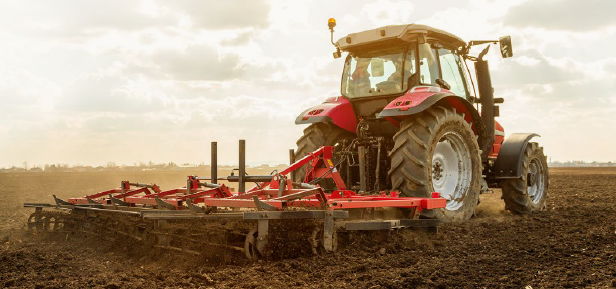
Farmers, farm owners, and farm managers can contribute to the study by completing a short survey about their current machinery use and their views on future technologies or approaches to reducing fuel use and emissions. The survey should take around 10–15 minutes.
Your insights are vital to ensure that any recommendations from the study reflect real-world farming practices and challenges. All responses will be treated in strict confidence, anonymous and used solely for research purposes.
To take part, please follow the survey link: https://survey.alchemer.eu/s3/90967107/Agricultural-machinery-DEFRA
The survey will be open until 8th February 2026. Thank you for considering this opportunity to contribute to an important piece of work for the future of agriculture.
Catch up with the recent FAS Webinar - Farm Finance Planning in 2026, held on 18th December
Hosted by the Farming Advice Service with presenter Kev Bevan, farm advisor and agricultural economist, this webinar includes a session introducing approaches to cash flow budgeting and tools for farm accounting, an update on Making Tax Digital for 2026, and a look at the Farming Toolkit for Assessing Nature Market Opportunities.
You can also catch up with the Improving Water Resilience on Farm webinar held in November. Delivered by Jerry Knox (Professor of Agricultural Water Management at Cranfield University), this webinar focused on the importance of water management on farm, the key challenges facing the sector, and approaches to help farmers understand risks.
Nitrate Vulnerable Zone (NVZ) closed period reminders
A reminder of the closed periods for spreading organic manure and manufactured fertiliser in an NVZ.
Check if your land is in an NVZ
Use the interactive map to find out if your land is in an NVZ.
There are established closed periods for NVZs that apply to certain types of organic manure (those with more than 30% readily available nitrogen, such as poultry manure and liquid organic manure) and manufactured fertilisers. There are some exceptions to the rules for the closed periods.
For more information, please visit the NVZ pages on GOV.UK.
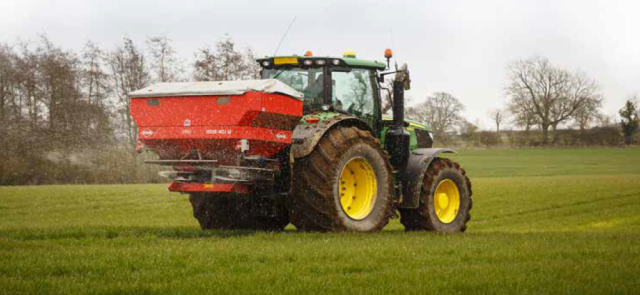
Please remember that, regardless of the NVZ closed periods, the Farming Rules for Water require all farmers (whether they have land located in an NVZ or not) to plan applications of organic manures or manufactured fertilisers. This is so that applications do not exceed the needs of the soil or crop, or give rise to a significant risk of diffuse pollution.
New SFI offering for 2026
The RPA have confirmed the Sustainable Farming Incentive (SFI) has a new offer launching later this year, set to continue supporting sustainable farming in England.
Defra have taken on feedback received, and confirmed the new offer is set to;
- make SFI simpler and more focused
- improve fairness and accessibility
- provide certainty and transparency
Full scheme details will be published later on this year, before the first application window opens.
The new SFI offer is set to be simpler and more focused, and has been streamlined by reducing the number of actions.
There will still be a broad offer to suit different types of farms and plenty of choice, with greater emphasis on actions that support sustainable food production.
The RPA would like as many farmers as possible to benefit from SFI, looking to achieve the government’s target of doubling the number of farms providing sufficient year-round resources for farm wildlife by December 2030, compared with 2025.
The first window will open in June, for those with small farms, and those without existing environmental land management agreements. A clear definition of “small farms” will be confirmed by the RPA before the first application window opens in June.
The second window will open in September, for all farmers. This includes those with small farms and those without an existing ELM agreement who did not apply in the first window.
You can read the full blog post here.
Oxford Farming Conference announcement: Backing farmers with a new era of partnership to boost farm profitability
"Our farmers are essential for the nation’s food security", the Environment Secretary has said, setting out a new era of partnership between government and farmers aimed at boosting profitability.
Speaking at the Oxford Farming Conference on 8 January, Environment Secretary Emma Reynolds announced a package of measures to ensure the government works in partnership with farmers to drive growth, secure a thriving future for the sector, and deliver high quality, affordable food for British families.
The government recognises when British farming thrives, consumers benefit through affordable, high-quality food on their tables. The government is ensuring modern British agriculture is productive, profitable and sustainable.
This was a key theme in the recommendations from Baroness Batters’ Farming Profitability Review. In response to the Review, the government is establishing the Farming and Food Partnership board which will give farmers and food businesses a seat at the table when policy is developed.
At the heart of this partnership is listening. The government have listened to farmers and stakeholders about their concerns on proposed changes to inheritance tax. This is why the government is increasing the inheritance tax threshold for Agricultural and Business Property Relief from £1 million to £2.5 million. That means couples can now pass on up to £5 million without paying inheritance tax on their assets. That’s on top of the existing allowances such as the nil-rate band. Around 85% of farming estates will now pay no inheritance tax on their farms and estates in 2026/27. The reforms will still ensure the wealthiest estates do not receive unlimited relief.
The announcements include an update on the Sustainable Farming Incentive (SFI) - Simplifying the scheme and make it more focused, with fewer actions and less complexity. The government will improve fairness and accessibility through a two-window approach. An initial window will open in June for both small farms and those without existing Environmental Land Management agreements.
A second window will open from September for all other farmers. This includes small farms and farms without an existing ELM agreement which did not apply in the first window.
Defra will publish a precise definition of small farms before the first application window opens in June following consultations with key stakeholders.
Defra will also publish a precise definition of ‘farms with no existing Environmental Land Management (ELM) agreement’ before the first application window opens in June. This will include farms with ELM agreements administered by the RPA, including previous versions of SFI, Countryside Stewardship and Higher Level Stewardship (HLS). It will not include other schemes which are not administered by the RPA, such as private sector schemes or Landscape Recovery.
If you are classified as a small farm and already have an ELM agreement you will be able to apply in window 1.
Defra will set clear budgets for each application window and provide regular updates, so farmers know when the window is close to being fully subscribed.
Defra will also confirm the budgets for each window before the first application window opens in June.
The announcement also included details of:
- £30 million Farmer Collaboration Fund – The government are developing a new approach that will provide funding for existing and new farmer groups and networks. It will help those groups to connect with experts and create strong partnerships on everything from environmental action to business growth.
- A long-term transformation of England's upland areas - Over the last year, Defra have started working with social entrepreneur Dr Hilary Cottam on a new approach. Dr Cottam and Defra will start a long-term partnership with communities in Dartmoor, then Cumbria. Together we will look at pooling public, private and third sector resources. This will lay the foundations for new income streams and create the skills and networks that let communities lead their own transformation.
- Extending the Farming in Protected Landscapes programme for another three years, with £30m in funding next year - The programme brings farmers, protected landscape organisations and communities together to deliver change at a scale no single holding could achieve alone. This extension means more farmers can deliver for wildlife, climate and their communities in England's National Parks and National Landscapes.

Making Tax Digital for Income Tax (MTD) is coming in from April 2026.
This change represents a significant shift in how income tax is reported and managed. Early awareness and preparation will help ensure a smooth transition, so you should sign up early to prepare. This will give you extra time to choose the right software, understand the new processes, and build confidence before the changes take effect.
What’s Changing?
From April 2026, MTD will require individuals to keep digital records and submit quarterly updates using software compatible with MTD.
This is the biggest change to personal tax since Self Assessment began.
Who is Affected?
- Sole traders and landlords with qualifying income over:
- £50,000 from April 2026
- £30,000 from April 2027
- £20,000 from April 2028
What is Qualifying Income?
Qualifying income is the total income you get in a tax year from self-employment and property before deducting any expenses or tax. If your combined income from these sources meets the threshold for the 2024–2025 tax year, you may need to use Making Tax Digital for Income Tax from April 2026.
Individuals are encouraged to check their income on their 2024-2025 tax return to see if they are required to use Making Tax Digital for Income Tax from April 2026: Work out your qualifying income for Making Tax Digital for Income Tax - GOV.UK.
Where to find more information:
Visit the Making Tax Digital Campaign Page on GOV.UK for full details on who needs to join and how to prepare.
- Check MTD for Income Tax dates you need to know for a clear timeline of start dates, quarterly update deadlines, and self-assessment tax return deadlines.
- For further information and support, visit Help and Support for Making Tax Digital including webinars, videos, and support content for taxpayers, business and agents.
On Site Flood Plan Review Guidance for all Reservoir Undertakers
If you are a reservoir Undertaker under the Reservoirs Act 1975 (as amended) (the Act) you are required to keep your on-site emergency flood plan (flood plan) under review and test it as set out in the 12AA (4) Direction. As the enforcement authority for the Act, the Environment Agency ensure that you meet these requirements.
Reviewing the flood plan
The EA recommend you review your flood plan in-depth every 5 years to ensure it is still fit for purpose. This applies to both high-risk and not high-risk reservoirs. The certification will need to be re-issued by a Qualified Civil Engineer. For high-risk reservoirs this can be your Supervising Engineer. For not high-risk reservoirs you will need to appoint an engineer to complete this. Further information can be found here.
Testing the flood plan
You are legally required to test your flood plan in line with the appointed engineer’s direction. In some cases, this direction will require Undertakers to carry out a Full Simulation Exercise, at a minimum of one of their reservoirs, within 5 years of the 12AA (4) Direction. Please ensure you are aware when yours is/are due as this could be as early as 2026.
For high-risk reservoirs, your Supervising Engineer may confirm compliance with testing of the flood plan in their annual section 12 statement or you could email us on reservoirs@environment-agency.gov.uk.
For not high-risk reservoirs, please email reservoirs@environment-agency.gov.uk to confirm testing has taken place as required.
Further information can be found here.
Big Farmland Bird Count 2026
The Big Farmland Bird Count is back for 2026! This year’s count begins on Friday 6th February and will run for two weeks, on a new digital platform to make counting easier.
The national annual census of farmland birds, run by the Game & Wildlife Conservation Trust (GWCT) and supported by the NFU, where it will be launched from its birthplace, the Trust’s demonstration farm, the Allerton Project.
For more information on the count, please visit the website here
The Rural Payments Agency has launched a series of 'How to' videos to help farmers prepare for a farm visit and meet your regulatory requirements.
The video series of practical guides covers everything from identification visits to getting set up online.
Rural Payments Agency Blog
To stay up to date with the latest information and updates from the Rural Payments Agency (RPA), sign up to the RPA Blog.
You can also listen to the RPA Podcast, which has been launched to help farmers, landowners and rural communities keep up to date with the latest news from the RPA. You can also follow the RPA on social media:
- X @ruralpay
- Facebook: facebook.com/RuralPaymentsAgency
- YouTube: Rural Payments Agency
- Instagram: ruralpay.
Stay up to date with the Sustainable Farming Incentive (SFI) blog posts here.

Defra regularly updates the Farming blog. Please subscribe to the blog to ensure you receive all the latest news.
Better agriculture rules to cut pollution and support farmers
New rules proposed on Tuesday 27 January will provide stronger protection to our soils, crops and water from harmful contaminants by increasing oversight on sewage sludge spreading.
Water Minister Emma Hardy and Farming Minister Angela Eagle set out the plans at a roundtable on 27 January with key farming, water and environmental stakeholders.
Existing agricultural water rules will be simplified into one new, clear and effective England‑wide rules cutting unnecessary duplication and complexity and making it easier for farmers to understand and follow the rules.
A consultation also launched on 27 January proposes tighter controls on spreading sewage sludge on farmland, including options to bring it under the Environmental Permitting Regulations, to better protect human health and the environment from harmful contaminants.
These measures will help reduce ammonia emissions from farming, an important part of delivering the government’s Environmental Improvement Plan and the Water White Paper – a major overhaul of how England’s water system is regulated and managed.
You can find out more about the streamlined agricultural rules here.
Last chance to have your say on fairness of combinable crop contracts
The consultation seeking your views on the fairness of contracts in the combinable crops supply chain closes at 11:59pm on 4 February 2026.
Improving fairness across the supply chain is a government priority. A stronger, more transparent contract system is essential to long-term food security and ensures farmers are treated fairly when selling their crops.
It's open to all, but if you work in the arable supply chain, your voice is especially important. If you grow wheat, barley, oats, oilseed rape or other combinable crops, this is your chance to share your experience and help ensure fairer treatment in the future.
After one of the most challenging harvests on record, with rising costs, volatile markets, weather pressure and tighter margins, concerns about how arable contracts operate have come into sharper focus.
The consultation asks farmers, merchants and processors about a range of contractual practice issues, including:
- clarity of standards,
- sampling and testing procedures,
- supply volumes,
- data sharing
- dispute resolution.
Update to Integrated Pest Management (IPM) Planning Tool launched
A new update to the free IPM Planning Tool was released by ADAS on Monday 12 January, allowing farmers and their advisors to better understand the success of their IPM strategies and help to inform IPM planning decisions for future seasons.
Funded by Defra, the tool has been used by over 2000 farmers, agronomists and advisors since 2023 to create over 5400 bespoke IPM cropping plans for free online. BASIS crop protection and environmental advisor continuing professional development points are available for completing the tool.
Improved functionality now includes:
- The option to add information on the success of previous IPM control measures, to improve the ability to review the farm progress of IPM uptake.
- Improved layout of the summary and reporting function, which now includes all the information entered into the IPM plans by the user to create better IPM summaries.
- New general questions added for those who keep livestock.
- The ability to add land areas for each crop type entered into the IPM plans.
The tool is freely available at www.ipmtool.net or via the Voluntary Initiative website https://voluntaryinitiative.org.uk/schemes/integrated-pest-management/.
You can find guidance about IPM here: IPM in farming - GOV.UK
3-year extension for Farming in Protected Landscapes Programme with £30 million next year
What is it?
Farming in Protected Landscapes (FiPL) funds projects that:
- support nature recovery
- mitigate the impacts of climate change
- provide opportunities for people to enjoy and understand the landscape and its cultural heritage
- protect or improve the landscape
It is open to farmers and land managers within England’s National Landscapes, National Parks and the Broads, and those outside these areas where projects benefit a protected landscape.
This locally led programme has farmers and FiPL advisers working side-by-side to deliver projects tailored to their landscapes.
Progress:
Over the past four years, this programme has supported over 11,000 farmers across 44 protected landscapes – funding more than 5,500 projects and creating around 100 farm cluster groups. You can find out what has been achieved in this Defra Farming Blog
Extension:
Secretary of State Emma Reynolds announced a three-year extension to FiPL with £30 million in funding confirmed for next year at Oxford Farming Conference in January. This extension means farmers in our most precious landscapes can continue delivering for nature, climate and their communities.
Farmers are balancing nature and food production for more resilient businesses
Practical steps like improving soil health and adding buffer strips can deliver real business benefits while protecting water and soil. Arable farmers like Patrick (in Suffolk) and Charlie (in Norfolk) are already seeing improved resilience and average yields. Access free, tailored, and confidential guidance from Catchment Sensitive Farming advisers, delivered locally through Natural England, for support in resilience farm business planning.
Find practical advice for soil and water quality for your farm here.
Strong uptake for Countryside Stewardship Mid Tier agreements
Almost 80% of farmers offered an extension to their Countryside Stewardship Mid Tier agreements have now accepted, the Rural Payments Agency has confirmed.
The Countryside Stewardship Mid Tier scheme supports farmers and land managers to deliver environmental benefits while maintaining sustainable food production through a range of options, such as creating habitats for wildlife, managing hedgerows, and reducing water pollution.
More than 4,000 farmers invited to do so have accepted extension agreements worth just under £59 million, by a further year.
You can find out more about the uptake of Countryside Stewardship Mid Tier agreements here
New regulations to ensure sheep farmers receive a fair price for their livestock
Government believes fairness in the supply chain is vital to ensure farmers receive a fair price for the quality food they produce. So, we’ve introduced new legislation ensuring sheep farmers are paid more fairly when selling their livestock for slaughter.
New laws have now come into force to mandate sheep carcase classification and price reporting, bringing the sheep sector in line with the beef and pork sectors. These Sheep Carcase (Classification and Price Reporting) (England) Regulations were signed into law in July 2025 and came into force 12 January 2026. Guidance is available on GOV.UK.
In consultation with industry, Government has developed the mandatory carcase classification scheme to ensure sheep producers are paid for their livestock at slaughter in a more consistent and transparent way, based on the quality and weight of the carcase. This will incentivise producers to improve productivity and respond to the demands of the market.
This measure will also contribute to providing greater fairness and transparency in the sheep sector across the UK. Similar legislation in Scotland also came into force on 12 January, Welsh legislation comes into force from 28 January and Northern Ireland are planning to legislate this spring.
First steps towards woodland creation
The first webinar in the Forestry Commission "Planning to Planting" series is now available to view as a recording, sharing practical advice and guidance to help landowners create woodland.
Landowner Vincent Hedley-Lewis of Birkholme Farms shares his experience planting with EWCO funding in this webinar which covered the benefits of woodland creation, the support available from the Forestry Commission and other organisations, the grant funding available to bring your plan to life and practical tips to consider at this early stage.
The recording can be viewed here.
England Woodland Creation Offer (EWCO) applications for next planting season
To secure an agreement offer in time for the next planting season, you need to submit your EWCO application by 31 May.
You can apply at any time of the year. Applications can take between 3 and 5 months to process from the time of receiving a complete application.
Applications must be complete and meet eligibility requirements. We cannot guarantee an agreement offer in time for the next planting season if information is still missing on 31 May.
You can find more about EWCO at How the England Woodland Creation Offer works
The Forestry Commission also have woodland management video series available covering activities to consider at different stages of a woodland's development, from early establishment through to mature woodland, and their associated benefits.
Designing your woodland
Join the Forestry Commission for the second event in their "Planning to Planting" series, on 4 March 2026.
Aimed at land managers and farmers considering planting for the first time, this virtual event will cover what to consider when designing your new woodland.
From thinking about the context of the landscape you're planting in, to the ecology and historical features that may already exist – we aim to give you the confidence to design a scheme that is sympathetic to the landscape, while meeting your objectives and complying with the UK Forestry Standard.
You'll hear from Forestry Commission Landscape & Woodland Design Advisor, Robin Gray, and landowner Nick Stainthorpe will be joined by Woodland Trust Outreach Adviser Jack Starbuck, to talk through the approach taken with 25 hectares of planting in Hertfordshire.
Reserve a spot at Designing your woodland webinar
What is incorporating agroforestry into commercial farming really like?
Read about the real-life experiences of farmers across six farms who have incorporated agroforestry into their practice. Discover the different types of agroforestry, its benefits, how to get started, and the resources and funding available to you.
Visit the Forest Research ‘Expanding Agroforestry’ resource Expanding Agroforestry or watch an introductory video for more information.

Free and confidential advice
The FAS is funded by the Department for Environment, Food and Rural Affairs (Defra). We provide free, confidential advice to help farmers and land managers in England understand and meet the legal requirements in English law around certain farming activities to protect people, livestock and the environment. We update the farming sector on relevant government farming policy that is applicable in England and on the actions that can be taken to help farmers comply with the relevant regulations. Our newsletter also provides articles on topics that are complementary to farming regulation, such as practices that benefit the wider environment and wellbeing support.
Our website hosts our previous newsletters, as well as technical articles and webinars that cover various topics in more detail.
Contacting the advice line: Farmers requiring telephone advice can contact the FAS technical advice line on 03000 200 301, Monday to Friday, between 08:30 and 17:00. The Rural Services Helpline provides a single number for all FAS, Rural Payments Agency (RPA), Animal and Plant Health Agency, Natural England and Forestry enquiries.
You can also email enquiries to advice@farmingadviceservice.org.uk. Our helpline team aims to respond to all telephone and email enquiries within one working day.
Stay up to date with us
Subscribe to our free monthly newsletter
If you don’t already receive our monthly FAS newsletter, please visit farmingadviceservice.org.uk/signup and enter your email address into the newsletter sign-up box.
In line with data protection regulations, such as the General Data Protection Regulation (GDPR) and the UK Data Protection Act 2018, the FAS has updated its privacy policy to explain how your data is kept safe. To view the policy, please visit www.farmingadviceservice.org.uk/events/privacy/.