

Thank you for continuing to subscribe to our monthly newsletter. We hope you continue to find the content useful and we welcome any feedback or suggestions on topics that you would like to see covered in future editions of the newsletter.
FAS technical advice line: 03000 200 301
- Key dates to be aware of
- Looking ahead in 2026
- FAS Webinars
- News from the National Farmers Union 2026 Conference
- Hedgerow management rules: cutting and trimming
- Urea: Red Tractor standards in their 3rd year
- ADOPT Funding Competition and Round 6
- Environment Agency Initial prospects for irrigation- forecast for 2026
- Rural Payments Agency Updates and Guidance
- Updates from the Farming blog and industry announcements
- £21.5 million boost for farming innovation in England
- Projects to make a difference on England's farms
- Third Landscape Recovery project enters implementation phase
- Defra launches new Nutrient Management Planning Tool (NMPT-GB)
- Share your views on the tenant farming sector
- The Bees' Needs Champion Awards 2026 are now open
- Making Tax Digital for Income Tax – Less than two months to go
- Enhanced package of cutting-edge technology to combat waste crime
- How can we help you?
- Stay up to date with us
A 12-week consultation began on 24 February, seeking views on the future of the Animal Health & Welfare Review. Submit your views now.
For any land located in an NVZ:
- You must not spread more than 30m3/ha of slurry or 8 tonnes/ha of poultry manure in a single application from the end of the closed period until the end of February.
- You must allow at least 3 weeks between each individual application.
IMPORTANT: Farming Rules for Water still apply and there must be agronomic justification for applying fertiliser to land. (NVZ Guidance)
You must not cut or trim a hedgerow that is covered by the Hedgerow management rules between 1 March and 31 August. You must not cause or permit another person to cut or trim such a hedgerow.
Further details, including situations where exemptions apply, can be found on GOV.UK.
Applications for The Farming Equipment and Technology Fund (FETF) open on 17 March 2026 and will run for 6 weeks, closing midday 28 April 2026
The next round of the Farming Innovation Programme will open on 9 April
In case you missed them
For any land located in a Nitrate Vulnerable Zone (NVZ), this is the date from which you can apply manufactured nitrogen fertilisers to grassland and tillage land if conditions are suitable.
- IMPORTANT: This is subject to compliance with the Farming Rules for Water and there must be agronomic justification for the application. (NVZ Guidance)
For any land located in a Nitrate Vulnerable Zone (NVZ), you can, from this date, apply organic manure with a high, readily available nitrogen content (for example, slurry, poultry manures or liquid digested sewage sludge) to grassland and tillage land on all soil types if conditions are suitable and you adhere to the quantity restrictions for applying these manures.
- IMPORTANT: This is subject to compliance with the Farming Rules for Water and there must be agronomic justification for the application. (NVZ Guidance)
For more details about the information provided in the key dates table, visit the Rules for Farmers and Land Managers and the relevant pages of GOV.UK.
Looking ahead in 2026
Farming Equipment and Technology Fund (FETF)
If you’ve accepted one or more Grant Funding Agreements (GFAs) under the FETF 2025, make sure you claim your payment by midday on 31 March 2026.
- You’ll need to submit a separate claim for each GFA, after you’ve paid for and received all the items in that GFA.
- You must use the claim form provided with the relevant GFA and must include all the items from that GFA in your claim. You can only submit one claim per grant theme.
Further guidance is available here.
New SFI offering launching in June 2026
The RPA have confirmed the Sustainable Farming Incentive (SFI) have a new offer launching later this year, set to carry on supporting sustainable farming in England.
Defra have taken on feedback, and confirmed the new offer is set to;
- make it simpler and more focused
- improve fairness and accessibility
- provide certainty and transparency
Full scheme details will be published later on this year, before the first application window opens.
FAS Webinar – Livestock farming update - recording now available online
On February 26th the Farming Advice Service team were joined by colleagues from Defra, the Rural Payments Agency and Catchment Sensitive Farming for an online update on systems and support for livestock farmers, including:
- Reporting cattle movements online using the Cattle Tracing System (CTS)
- An update from the Livestock Information Transformation Programme (LITP)
- Latest news from the Livestock Information Service (LIS) for sheep, goats and deer reporting.
- What’s new with the Animal Health and Welfare Pathway
- An update from CSF on support available from their teams
The recording of the webinar is now available to watch online, along with the links shared during the presentation and a copy of the slide deck.
Coming soon - FAS Webinar on Nutrient Management Planning
Following the launch of the new Nutrient Management Planning Tool, we will be partnering with Mel Holloway - expert farm advisor - and teams from the Environment Agency and Catchment Sensitive Farming to offer a free online event to help farmers get to grips with the best approach to nutrient management planning.
Registration for this event at the end of March will open shortly - further details to follow.

Don't miss these Defra webinars:
Wednesday 4 March at 12pm: Introducing the new nutrient management planning tool on GOV.UK - Register to attend
Thursday 12 March at 10am: Farming Equipment and Technology Fund 2026 - Register to attend
Thursday 19 March at 5pm: How to build more resilient farm businesses in the East of England - Register to attend
- Read more about Defra's Farming for the Future programme in the East of England here.
News from the National Farmers Union 2026 Conference
Delivering a sustainable future for farmers - National Farmers’ Union 2026 Conference
At the NFU conference on Tuesday 24 February, Secretary of State Emma Reynolds shared more detail on how government will deliver its vision for agriculture.
Sustainable Farming Incentive
The new SFI offer in 2026 has been shaped directly by industry feedback to support productive, profitable farm businesses while delivering environmental outcomes.
It will be simpler, with fewer actions and less complexity while still having plenty of actions available for all farm types, so you can pick the actions that best fit your farm. Fairness and access will improve, with a new £100,000 annual agreement cap so more farms will be able to benefit.
SFI opens in June for small farms up to 50 hectares and all farms without existing ELM agreements, with a second window from September for all farms.
Read about the SFI 26 offer in detail - including the list of 71 actions and payment rates - on the Defra Farming Blog.
Equipment and Innovation Grants
From seed-planting robots to slurry systems, FETF helps farmers cut costs and boost efficiency. The final round of FETF will make £50 million available for equipment across productivity, slurry management and animal health and welfare, with grants of up to £25,000. Defra will also look at how best to combine the strongest elements of our grants from 2027, making it easier to apply and ensuring funding is targeted effectively.
Applications open 17 March and will remain open for 6 weeks. Find out more in this Farming Blog post on FETF.
In addition, the Farming Innovation Programme (FIP) will back farmers with £70 million for practical research and development to strengthen agriculture in this country. This includes £30 million for the ADOPT programme to help farmers trial and adopt innovations on farm, with a new round due to open in April.
Environmental Land Management (ELM) Capital Grants
Defra will open a new round of the main ELM Capital Grants offer in July 2026. These are payments that help cover the cost of one-off investments on farms. £225 million will be available for tree planting, hedgerow restoration and improving water quality, an increase on the £150 million available last year.
Farming and Food Partnership Board
A new Farming and Food Partnership Board will hold its first meeting in March 2026, bringing together government, the NFU, and key industry representatives. The Board will develop Sector Growth Plans, beginning with horticulture and poultry, identifying barriers to growth and working to strengthen supply chain relationships across the farming sector.
These plans will identify barriers to growth and profit, including regulatory frictions, examine how costs can be better distributed across the food chain, and forecast and grow market demand through exports, retail, and public-sector buying.
Boosting animal health and welfare
A consultation was launched on 24 February to gather views on mandatory annual vet visits for all cattle, sheep, and pig farmers in England.
These proposals have been developed in partnership with industry, and this consultation is a chance to hear from a wider range of people so that the final approach is informed by the experience of those across the sector.
In addition to the consultation, Defra confirmed a new grant providing funding of biosecurity advisory reviews for poultry keepers to launch in summer. These reviews will be delivered through on‑farm vet visits.
Find out more about today’s package of announcements
These announcements set out clearer, more predictable schemes and funding that farmers can plan around – with the SFI, grants and capital support shaped directly by farmer feedback.
Defra will set out more clarity later in 2026 with the publication of the Farming Roadmap. Over the past few months, workshops and meetings have taken place across the country to hear views and help ensure the roadmap reflects real experiences and the priorities that matter most.
Read more about the announcements made at NFU Conference in this Defra Farming Blog post.
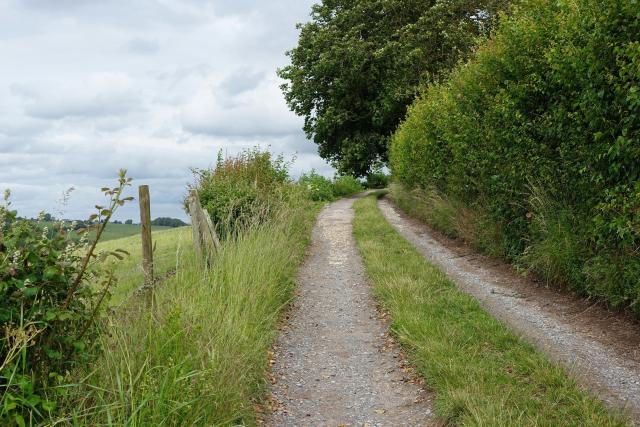
As we approach the start of the permitted cutting/trimming window for hedgerows on farm, we thought it would be helpful to remind you of the hedgerow management regulations.
Here’s a reminder of the rules in those regulations.
- To protect active bird nests during this time, there is a hedgerow cutting and trimming ban from 1 March to 31 August (inclusive).
- To prevent harm to the structure and health of the hedgerow, the regulations require a 2-metre buffer strip, measured from the centre of a hedgerow, where a green cover must be established and maintained.
- No cultivation or use of pesticides or fertiliser on land within 2 metres of the centre of a hedgerow.
The Rural Payments Agency (RPA) is the regulator for these rules and you can read their online guidance.
Remember, this is not cross compliance, which ended in England in 2023, and enforcement is not linked to any rural payments.
The regulations could apply to any person responsible for the hedgerow or any person carrying out works on it, or the adjacent buffer strips. However, farmers, landowners and contractors are the largest groups affected by these regulations. Specifically, the cutting and trimming rules apply to the person who actually carries out the cutting and trimming. This means they apply to contractors who carry out such cutting and trimming. They can also apply to any person who causes or permits another person to cut or trim. The buffer strip rules apply to the person responsible for the hedgerow.
The RPA carries out visits primarily following possible breaches that are brought to its attention. In 2025, most referrals received involved cutting and trimming of roadside hedgerows. Each referral is triaged by the RPA to make sure it carries out visits in only those cases where there is a genuine possibility of a breach of the rules. For example, it will consider if the cutting or trimming falls within the scope of the exemption from the rules for road safety purposes.
You can find a guidance leaflet for the Hedgerow Management Rules on the FAS website.
Full details of the rules, when exemptions apply and what you need to do, can be found at;
We are coming round to the urea restricted period again (from 1 April to 14 January), when Red Tractor members will be asked to use only urea fertilisers that have been protected or treated with a urease inhibitor. Urease inhibited or protected urea reduces ammonia emissions by more than 70%, leaving more nutrient nitrogen available for use by the crop.
The scheme was initiated by a consortium of industry organisations (including NFU, and AIC) and came about when Defra consulted on regulatory options to reduce ammonia emissions from the use of urea fertilisers. Defra has supported this outcome with the hope that there will be sufficient take-up of protected/urease-inhibited urea so that regulation will not be necessary.
The scheme is to be delivered through Red Tractor Farm Assurance schemes and Fertiliser Advisers Certification and Training Scheme (FACTS).
The Red Tractor urea standards require scheme members to:
- only use untreated urea from 15 January to the end of March each year.
- use protected or urease inhibited urea from 1 April (until 14 January).
The Defra ADOPT funding competition is now open for Round 6 - the largest round to date- with up to £5 million available to support farmer‑led, collaborative on‑farm trials and demonstration projects across England. Applications are open now, with projects able to start from 1 August.
Alongside the main grant, the Facilitator Support Grant (Round 6) is live, offering up to £2,500 to support early project development with a registered Project Facilitator. In previous rounds, early engagement at this stage has consistently led to clearer ideas, stronger applications, and more confident delivery.

What ADOPT is supporting
ADOPT backs practical, farmer‑designed projects that test ideas on farm and share learning openly so others can benefit. These are not academic exercises; they are hands‑on trials and demonstrations focused on the real questions that shape day‑to‑day farm decisions.
To date, projects have explored soil and nutrient management, livestock systems, arable trials, equipment and technology, and new ways of collaborating to improve resilience, productivity, and environmental outcomes. The common thread is generating useful, transferable evidence that can be picked up by other farmers.
See what strong ADOPT projects look like
To show ADOPT in practice, Defra has published a new blog and podcast announcing Round 6. It includes a conversation with the ADOPT Support Hub and interviews with two farmers currently leading live projects:
- Bryony Graham – Willow‑based compost for soil health
Bryony is testing locally produced willow‑based compost as a soil amendment. The project explores whether willow compost can improve soil structure and nutrient availability, strengthen overall soil health, reduce reliance on bought‑in inputs, and help close nutrient loops on farm. - Peter Southwell – Rethinking crop nutrition
In Yorkshire, Peter is running an ADOPT project focused on alternative approaches to nutrient management in arable systems. The work examines how adjustments to nutrient strategy and application can improve crop performance and soil function while reducing input costs and environmental impact.
In the podcast, you’ll hear what ADOPT is for, how the Support Hub helps applicants and project teams, and what farmers themselves have found most valuable about leading projects. It’s a grounded, honest starting point for anyone who wants to understand how ADOPT works day to day.
ADOPT round 6 opens today: hear how farmers are using funding – Farming
All 70 live ADOPT projects are listed on the Support Hub—ideal inspiration for shaping an idea, framing a question, or structuring a trial.

Environment Agency Initial prospects for irrigation- forecast for 2026
The Environment Agency (EA) has published their initial irrigation prospects report. This report includes details on the current water resources situation, irrigation forecast status for each area, long term weather forecast and updates on dry weather support for the sector. An updated irrigation prospect report will be published at the end of April to include a more detailed EA area forecast to reflect any changes with the current water resources position.
The Rural Payments Agency has launched a series of 'How to' videos to help farmers prepare for a farm visit and meet your regulatory requirements.
The video series of practical guides covers everything from identification visits to getting set up online.
Rural Payments Agency Blog
To stay up to date with the latest information and updates from the Rural Payments Agency (RPA), sign up to the RPA Blog.
You can also listen to the RPA Podcast, which has been launched to help farmers, landowners and rural communities keep up to date with the latest news from the RPA. You can also follow the RPA on social media:
- X @ruralpay
- Facebook: facebook.com/RuralPaymentsAgency
- YouTube: Rural Payments Agency
- Instagram: ruralpay.
Stay up to date with the Sustainable Farming Incentive (SFI) blog posts here.

Defra regularly updates the Farming blog. Please subscribe to the blog to ensure you receive all the latest news.
Projects to make a difference on England's farms
£960,000 in funding will help one project’s aim to develop the Sunshine Tomato, a provitamin D₃-enriched tomato. Building on previous field trials, this pioneering crop will improve nutrition and help address global vitamin D deficiency, keeping bones strong and healthy.
Another project with £1,490,000 in funding will demonstrate how growing faba bean-based animal feed within the UK supports our local feed supply for dairy farming. This could reduce reliance on imports as well as cut greenhouse gas emissions from English dairy systems by up to 1.6 million tons of CO₂e per year.
The Farming Minister Dame Angela Eagle said:
“Innovation is central to a more productive, resilient farming sector.
This funding will back new ideas farmers can use on the ground to cut methane and fertiliser-related emissions, strengthen crop resilience, and improve nutrition.”
Find out more about some of the successful projects in the Defra Farming Blog post.
Third Landscape Recovery project enters implementation phase
We’re pleased to share that the Evenlode Landscape Recovery Project has reached the stage at which plans can turn into action.
This is an important milestone for the project, and for the scheme. Evenlode is now the third and largest Landscape Recovery project to reach this stage.
The Evenlode Landscape Recovery Project lies within the Evenlode Catchment and the Cotswolds National Landscape. It spans over 3,000 hectares.
Evenlode is the first Landscape Recovery project to be led by a farmer cluster. Managed by The North East Cotswold Farmer Cluster CIC (NECFC), the project comprises over 50 land managers and farmers, including tenant farmers.
This collaboration of farmers, tenants and other land managers will work to restore the hydrological function of three key rivers—the Evenlode, the Glyme and the Dorn —while maintaining productive farmland. The project demonstrates that landscape-scale environmental recovery and sustainable, profitable farming can work hand in hand, using the right interventions in the right places.
The project is to be awarded over £100m in implementation funding from Defra, going to over 50 farmers and land managers over the next 20 years.
Read more in this Farming Blog.
The Bees' Needs Champion Awards 2026 are now open
These awards celebrate the fantastic work taking place across England to support our bees, butterflies, moths and other precious pollinators, including work by farmers.
The competition is run each year in partnership with the Nature Friendly Farming Network (NFFN).
Projects can include creating wildflower margins, managing hedgerows to provide year-round food and shelter or other ways of farming alongside nature.
Applications are welcome from farmers, groups, individuals, schools and businesses.
Winners receive a certificate and invitation to an awards ceremony. Applications close 17 May 2026.
What you can do to help pollinators:
Plant nectar-rich flowers, shrubs and trees along field margins
- Leave patches of land to grow wild
- Reduce grass cutting frequency
- Create buffer strips with wildflower or nectar mixes
- Manage hedgerows to provide year-round food and shelter
- Avoid disturbing insect nests and hibernation spots
- Consider carefully before using pesticides
£21.5 million boost for farming innovation in England
15 new farming innovation projects across England will receive over £21.5 million, developing practical ideas to help make the nation's farms more profitable.
These projects will drive cutting-edge research with successful projects including growing rubber alternatives from dandelions, vitamin enriched tomatoes and new varieties of hemp.
Read more here.
Defra launches new Nutrient Management Planning Tool (NMPT-GB)
To help farmers cut pollution and boost productivity, Defra has released a new, free, online and easy to use nutrient management planning tool (NMPT-GB).
The tool is kept up to date with the latest recommendations from AHDB's Nutrient Management Guide (RB209) and can help farmers and their advisors in England and Wales save time and money, and match nutrients more closely to their crop and soil needs.
Subsequent releases will include Scotland and expand functionality including importing data from PLANET.
There is no legal requirement to use NMPT-GB. Regulators cannot access farm-specific data through the tool. Data from the tool will not be used for compliance purposes, but users have the flexibility to use the tool to support demonstration of compliance if they wanted to.
Share your views on the tenant farming sector
With over a third of all farmland in England managed by tenants, the Government reaffirmed its commitment to the tenant farming sector by appointing England’s first Commissioner for the Tenant Farming Sector, Alan Laidlaw, in September 2025.
As Commissioner, Alan’s role is to act as a trusted and impartial point of contact for tenants, landlords and advisers - tackling poor behaviour across the sector, improving collaboration, and investigating complaints. Over recent months, Alan and his team have been meeting with stakeholder organisations and speaking with farmers across the country, with the aim of ensuring everyone has a voice.
As part of this process, they have launched a short survey to gather views on awareness of the Commissioner’s role and the Agricultural Landlord and Tenant Code of Practice.
Share your views. The survey closes on 6 March 2026.
You can find out more about Alan, his role and the survey in this Defra Farming Blog.
Enhanced package of cutting-edge technology to combat waste crime
New surveillance, detection and investigative capabilities rolled out by Environment Agency to tackle waste crime.
Waste criminals will be detected and stopped before they even get started, thanks to a new package of new measures announced by the Environment Agency on 20 February 2026.
You can find out more about this crackdown on waste crime here.
Making Tax Digital for Income Tax – Less than two months to go
There are now less than two months until sole traders and landlords with turnover above £50,000 will need to use Making Tax Digital (MTD) for Income Tax from April 2026.
HMRC will be looking at the 2024/2025 tax return to assess if individuals need to use MTD for Income Tax from April 2026.
If affected, it is important to prepare for the changes now. Understand more about the new process, how to choose compatible software and how to sign up: Making Tax Digital for Income Tax - HMRC guide
What’s changing?
Individuals need to keep digital records and submit quarterly updates using software compatible with MTD. From April 2026, self-employed/sole traders and landlords with turnover above £50,000 will need to start using it.
MTD will then be rolled out to these individuals with turnover above £30,000 from April 2027 and £20,000 from April 2028.
What is compatible MTD Software?
There are two different kinds of software. The software you choose depends on your individual circumstances.
- Software that creates digital records
This might be right for you if you want one software product that will meet all the requirements, or if you have more complex tax affairs.
- Software that connects to your records (bridging software)
This might be right for you if you have less complicated tax affairs, want to keep using your current non-MTD compatible accounting software, or want to keep your digital records on a spreadsheet.
You can even use a combination of different software, if that works better for you.
Depending on your individual requirements, there are both free and paid software options available. Some software includes additional features like built-in reminders, or phone camera receipt scanning – it’s up to you which you’d prefer.
Visit choosing the right software or use the software finder tool to find compatible software that meets your needs.
Where to find more information:
- Check out Making Tax Digital for Income Tax for sole traders and landlords for a step by step on how to get ready for Making Tax Digital for Income Tax, including signing up to the service.
- Check MTD for Income Tax dates you need to know for a clear timeline of start dates, quarterly update deadlines, and self-assessment tax return deadlines.
- For further information and support, visit Help and Support for Making Tax Digital including webinars, videos, and support content for taxpayers, businesses and agents.

Free and confidential advice
The FAS is funded by the Department for Environment, Food and Rural Affairs (Defra). We provide free, confidential advice to help farmers and land managers in England understand and meet the legal requirements in English law around certain farming activities to protect people, livestock and the environment. We update the farming sector on relevant government farming policy that is applicable in England and on the actions that can be taken to help farmers comply with the relevant regulations. Our newsletter also provides articles on topics that are complementary to farming regulation, such as practices that benefit the wider environment and wellbeing support.
Our website hosts our previous newsletters, as well as technical articles and webinars that cover various topics in more detail.
Contacting the advice line: Farmers requiring telephone advice can contact the FAS technical advice line on 03000 200 301, Monday to Friday, between 08:30 and 17:00. The Rural Services Helpline provides a single number for all FAS, Rural Payments Agency (RPA), Animal and Plant Health Agency, Natural England and Forestry enquiries.
You can also email enquiries to advice@farmingadviceservice.org.uk. Our helpline team aims to respond to all telephone and email enquiries within one working day.
Stay up to date with us
Subscribe to our free monthly newsletter
If you don’t already receive our monthly FAS newsletter, please visit farmingadviceservice.org.uk/signup and enter your email address into the newsletter sign-up box.
In line with data protection regulations, such as the General Data Protection Regulation (GDPR) and the UK Data Protection Act 2018, the FAS has updated its privacy policy to explain how your data is kept safe. To view the policy, please visit www.farmingadviceservice.org.uk/events/privacy/.