
Thank you for continuing to subscribe to our monthly newsletter. We hope you continue to find the content useful and we welcome any feedback or suggestions on topics that you would like to see covered in future editions of the newsletter.
FAS technical advice line: 03000 200 301
- FAS availability in December
- Key dates to be aware of
- Looking ahead to 2026
- FAS Webinars
- Remember to submit your Sheep and Goat inventory
- Talking Farming in 2026
- Tax is Changing in April 2026 – Act Now
- Farming Profitability Review recommendations published and new Farming and Food Partnership Board announced
- One year of the Agricultural Supply Chain Adjudicator
- Modernising Reservoir Safety: Consultation Launching in 2026
- Publication of LRO Methodology
- Reminder - abstraction licence renewal applications
- Rural Payments Agency Updates and Guidance
- Updates from the Farming blog and industry announcements
- Combinable Crops Contracts - Have Your Say
- Plans for cleaner air and water with new Environment Improvement Plan and £500m for Landscape Recovery
- Bird flu (avian influenza): latest situation in England
- Bluetongue: latest situation
- Farmers testing new technology for the sector
- Trials to make a difference on England’s farms
- The ADOPT Fund remains open to farmers
- Consultation on Environmental Permits
- Animal Welfare Strategy for England published
- Livestock disease guidance
- £500m for Landscape Recovery Projects
- Stronger Legal Protections Against Livestock Worrying
- How can we help you?
- Stay up to date with us
The team at the Farming Advice Service wish you and your loved ones a joyful festive season and a prosperous new year.
Please be aware that from midday on Wednesday 24th December until 8:30am on Friday 2nd January, our helpline service will be closed for the festive period. You can still email us with any queries to advice@farmingadviceservice.org.uk and a member of the team will get back to you as soon as possible on 2nd January.
We understand that the festive period can be challenging for many. If you find yourself struggling and unsure where to turn, the Farming Help Alliance provides confidential support for financial, personal, or emotional difficulties.
Call 03000 111 999 (helpline open 07:00-23:00, 365 days a year).
This is the deadline to apply for a Nitrate Vulnerable Zone (NVZ) grassland derogation in 2026.
For grassland located in a Nitrate Vulnerable Zone (NVZ), if the livestock manure produced on your farm is likely to exceed the amount you're allowed to spread on your land (farm limit) in 2026, you can apply for a grassland derogation to use a higher limit of up to 250kg of nitrogen per hectare, if the nitrogen comes from grazing livestock manure. (GOV.UK)
If you keep sheep and/or goats, you must carry out your annual count of the animals on your holding as of 1 December, enter this into your holding register and complete the inventory by 31 December. You should have received a letter in November which tells you what to do. (GOV.UK)
For any land located in an NVZ, this is the beginning of the year for assessing the annual amount of livestock manure applied to your land. (NVZ Guidance)
For any land located in a Nitrate Vulnerable Zone (NVZ), this is the date from which you can apply organic manure with a high, readily available nitrogen content (for example, slurry, poultry manures or liquid digested sewage sludge) to grassland and tillage land on shallow or sandy soils if conditions are suitable and you adhere to the quantity restrictions for applying these manures.
- IMPORTANT: This is subject to compliance with the Farming Rules for Water and there must be agronomic justification for the application. (NVZ Guidance)
For any land located in a Nitrate Vulnerable Zone (NVZ), this is the date from which you can apply manufactured nitrogen fertilisers to grassland and tillage land if conditions are suitable.
- IMPORTANT: This is subject to compliance with the Farming Rules for Water and there must be agronomic justification for the application. (NVZ Guidance)
For any land located in a Nitrate Vulnerable Zone (NVZ), you can, from this date, apply organic manure with a high, readily available nitrogen content (for example, slurry, poultry manures or liquid digested sewage sludge) to grassland and tillage land on all soil types if conditions are suitable and you adhere to the quantity restrictions for applying these manures.
- IMPORTANT: This is subject to compliance with the Farming Rules for Water and there must be agronomic justification for the application. (NVZ Guidance)
In case you missed them
If you hold a water abstraction licence, which authorises abstraction wholly within the months of April to October, you may need to report your water abstraction return for the twelve-month period from 1 November 2024 to 31 October 2025. If you need to submit a return, you will receive a notification from the EA at the end of October/beginning of November, and you have until 28 November to submit your return. GOV.UK
For more details about the information provided in the key dates table, visit the Rules for Farmers and Land Managers and the relevant pages of GOV.UK.
Looking ahead to 2026
Farming Equipment and Technology Fund (FETF)
If you’ve accepted one or more Grant Funding Agreements (GFAs) under the FETF 2025, make sure you claim your payment by midday on 31 March 2026.
- You’ll need to submit a separate claim for each GFA, after you’ve paid for and received all the items in that GFA.
- You must use the claim form provided with the relevant GFA and must include all the items from that GFA in your claim. You can only submit one claim per grant theme.
Further guidance is available here.
Hedgerow cutting and trimming rules
If planning hedgerow cutting or trimming for the New Year, remember that you must not cut or trim a hedgerow that is covered by the rules from 1 March to 31 August. You must also not cause or permit another person to cut or trim such a hedgerow.
Full details of the Hedgerow Management Rules can be found here.
Catch up with the recent FAS Webinar - Farm Finance Planning in 2026, held on 18th December
Hosted by the Farming Advice Service with presenter Kev Bevan, farm advisor and agricultural economist, this webinar includes a session introducing approaches to cash flow budgeting and tools for farm accounting, an update on Making Tax Digital for 2026, and a look at the Farming Toolkit for Assessing Nature Market Opportunities.
You can also catch up with the Improving Water Resilience on Farm webinar held in November. Delivered by Jerry Knox (Professor of Agricultural Water Management at Cranfield University), this webinar focused on the importance of water management on farm, the key challenges facing the sector, and approaches to help farmers understand risks.
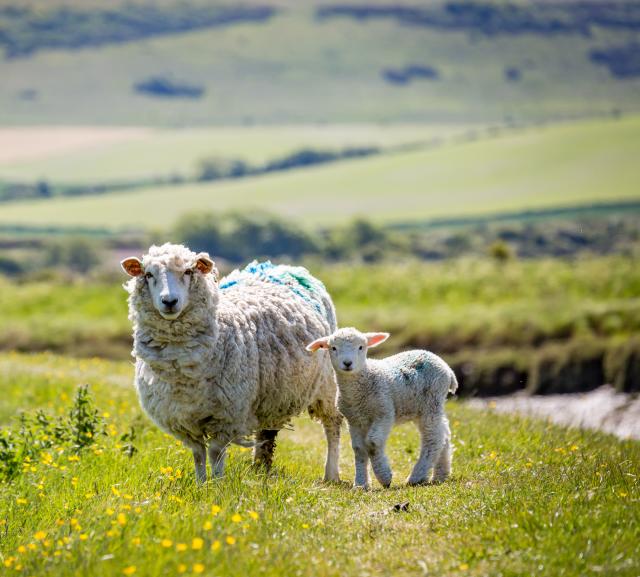
If you keep sheep and/or goats, you must carry out an annual count of the animals on your holding as of 1 December, enter this into your holding register, complete the inventory form and submit it online or by post by 31 December.
Keeping an annual inventory is a requirement of sheep and goat legislation. Following these rules means that animals can be traced at all times to help prevent and contain disease.
It is your responsibility to follow the rules to avoid penalties such as movement restrictions on your herd, reduced subsidy payments, fines or prosecution.
You can complete your inventory online or by post.
You can use the online sheep and goats annual inventory to send your records online. Your inventory letter or email will include the details you need to access the service. To log in you will need your:
- 9-digit county parish holding (CPH) number, as it appears on your letter or email from Defra
- Postcode
The service allows you to save your inventory record as you go.
Send your inventory by post
- Fill in the form that Defra sent to you with your letter.
- Return it in the pre-paid envelope. It will be addressed to the Office of National Statistics (ONS).
- You must send your completed form to the ONS by 31 December.
For guidance on how to complete the forms, please visit GOV.UK. You should have received a letter from Defra by 11 December.
If you did not receive correspondence by 11 December with information on how to complete your inventory, please call the Defra Surveys Team helpline on 03000 600 140 or email surveys@defra.gov.uk.
If you stop keeping sheep and goats
You must tell RPA and the Animal and Plant Health Agency (APHA) as soon as possible if you stop keeping sheep and goats.
Read how to update your details or contact the Defra rural services helpline
Defra rural services helpline - 03000 200 301 - Monday to Friday, 8:30am to 5pm
Defra have recently published a blog about keeping the conversations going in 2026.
To make sure Defra's plans are the best they can be, they welcome your suggestions on which events across the country their teams should prioritise attending. A look ahead of where you may be able to find Defra representatives in person, and also how to suggest other events, can be found in the blog post here.
You can also find the confirmed events there will be Defra attendance here, so you can ask for advice and any questions you may have in person.


Making Tax Digital for Income Tax (MTD) is coming in from April 2026.
This change represents a significant shift in how income tax is reported and managed. Early awareness and preparation will help ensure a smooth transition, so you should sign up early to prepare. This will give you extra time to choose the right software, understand the new processes, and build confidence before the changes take effect.
What’s Changing?
From April 2026, MTD will require individuals to keep digital records and submit quarterly updates using software compatible with MTD. This is the biggest change to personal tax since Self Assessment began.
Who is Affected?
- Sole traders and landlords with qualifying income over:
- £50,000 from April 2026
- £30,000 from April 2027
- £20,000 from April 2028
What is Qualifying Income?
Qualifying income is the total income you get in a tax year from self-employment and property before deducting any expenses or tax. If your combined income from these sources meets the threshold for the 2024–2025 tax year, you may need to use Making Tax Digital for Income Tax from April 2026.
Individuals are encouraged to check their income on their 2024-2025 tax return to see if they are required to use Making Tax Digital for Income Tax from April 2026: Work out your qualifying income for Making Tax Digital for Income Tax - GOV.UK.
Where to find more information:
Visit the Making Tax Digital Campaign Page on GOV.UK for full details on who needs to join and how to prepare.
- Check MTD for Income Tax dates you need to know for a clear timeline of start dates, quarterly update deadlines, and self-assessment tax return deadlines.
- For further information and support, visit Help and Support for Making Tax Digital including webinars, videos, and support content for taxpayers, business and agents.
Farming Profitability Review recommendations published and new Farming and Food Partnership Board announced
Update from Defra: New board puts farming at the heart of government
"Farmers and food businesses will have a stronger voice at the heart of the Government through a new Farming and Food Partnership Board, announced on 18 December to drive growth, productivity and long-term profitability across the sector.
The launch comes as the Government publishes Baroness Minette Batters' independent Farming Profitability Review, which highlights the need for closer collaboration between farming, industry and the Government, and greater clarity and certainty for farm businesses looking to grow and invest
The Board, chaired by Environment Secretary Emma Reynolds alongside Farming Minister Dame Angela Eagle as deputy, will be about serious action and a strong voice at the centre of government bringing together senior leaders in farming, food, retail, and finance
Farming needs a strong voice at the centre of government, and the new Board will help shape decisions, remove barriers to investment and tackle the challenges the sector faces - a key element of our cross-government food strategy.
Importantly, the Board won't take a one size fits all approach. It will focus on sector plans where there are clear opportunities to boost productivity, starting with horticulture and poultry, where there is significant untapped potential to increase homegrown production.
The objective of the Farming and Food Partnership Board will be to strengthen food production at home and ensure government policy delivers real change for farmers. It will complement the work of the Food Strategy Advisory Board (FSAB), who have been advising on various matters, including growth, as part of their broader work to kickstart systems change across the entire food chain.
Further action to back farm businesses
Alongside the launch of the new Farming and Food Partnership Board, ministers are setting out further immediate actions in line with Baroness Batters’ recommendations, including:
- Unlocking food and farming infrastructure through planning reform – Proposed changes to the National Planning Policy Framework announced earlier this week will help speed up delivery of key infrastructure such as on-farm reservoirs, greenhouses and farm shops, making it easier for farmers to invest and expand.
- Stepping up action on supply chain fairness – Continuing scrutiny of unfair practices and considering of changes to Groceries Code Adjudicator oversight.
- Tackling barriers to private finance – Bringing together farmers, agri-food businesses and major financial institutions to attract investment into farm transformation and productivity.
- Supporting exports and new markets – Ministers leading dedicated trade missions in 2026 to showcase British food and drink overseas.
Environment Secretary Emma Reynolds has said: "When farming thrives, the whole country benefits. British farmers are central to our food security, our rural economy and the stewardship of our countryside."
“This is about serious action to remove barriers, unlock investment and make the food system work better, so farm businesses can grow, invest and plan for the future with confidence."
Next steps
This is just the start of the government's response to Baroness Batters' important, independent Review. They will carefully consider all of Baroness Batters' recommendations as we continue to develop our 25-year Farming Roadmap which will be published in 2026.
Today’s announcements form a core part of the Government’s food strategy, focused on backing British farming, strengthening food security and supporting profitable, resilient farm businesses for the long term."
Read more about the announcement in this Defra Farming Blog post.
One year of the Agricultural Supply Chain Adjudicator
A commitment to tackling contractual unfairness wherever it exists; that is the message from the new Agricultural Supply Chain Adjudicator (ASCA) Richard Thompson on completing his first year in the role.
The Adjudicator is advancing fairness and transparency in the supply chain, starting with the milk sector. Milk Regulations were introduced in 2024 to ensure fairer contract practices. With the 12-month transition ending in July 2025, all milk contracts must now meet its requirements. Following this, Pig Regulations came into force in August this year, with a similar 12-month transition.
In the ASCA’s first annual report, published on GOV.UK, many farmers have welcomed this move to clearer, fairer and more transparent contracts. They said the new rules had the potential to bring greater stability to their businesses.
At the same time, a lot of farmers were unsure if their current contracts were fully compliant; particularly around pricing mechanisms, notice periods and how changes can be made. The most common concern was about speaking up.
If you think your contract may not comply, you can check the guidance, speak to your buyer, contact the ASCA confidentially for informal advice, or make a formal complaint if necessary.
Learn more about the Adjudicator’s work:
Hear from the Adjudicator about his work, challenges facing the dairy sector, and how the new regulations are helping to build a fairer and more transparent supply chain in the latest edition of the Defra Farming podcast.
Richard is joined by NFU Dairy Board Chair, Paul Tompkins, and Head of Milk Supply and Operations at Barber's Farmhouse Cheesemakers, Michael Masters.
Do you own or operate a reservoir?
Reservoir safety is about ensuring reservoirs and their associated structures are constructed, operated and maintained in a safe manner.
The UK and Welsh Governments are delivering the Reservoir Safety Reform Programme in response to the recommendations set out in the Independent Reservoir Safety Review Report
The report sets out the actions needed to ensure the regulation of reservoirs is fit for the future. The programme is being delivered in a phased way over several years, by the Environment Agency, Defra, Welsh Government and Natural Resources Wales.
A public consultation coming soon is seeking views and thoughts on options for updating the policy on reservoir safety. The themes will include:
- an improved hazard classification system for reservoirs
- a safety management system for reservoirs
- clearer responsibilities for reservoir owners
- the structure of engineer panels and their responsibilities
- new responsibilities for regulators
Benefits of the proposed reforms
- reduce risk to life,
- risk of damages to property, infrastructure and the environment,
- reduce the risk of economic disruption and
- deliver fair and proportionate regulation of reservoir safety.
Register for updates here
The main reasons for improving the reservoir safety system
- The Independent Reservoir Safety Review report following the Toddbrook incident - its recommendations will ensure that the safety regime remains robust and fit for the future.
- Climate change - which is increasing the pressures on reservoir infrastructure and demand for reservoirs and water resources.
- The need to bring it in line with modern safety management practice in other sectors.
- The declining numbers of reservoir engineers and the increasing demand for specialist engineers in future.

Local Resource Options Screening Study Methodology Now Freely Available:
The Environment Agency launched the Local Resource Option (LRO) Screening Studies programme in 24/25. The LRO programme is a government funded initiative designed to support farm groups identify practical, local solutions to improve the long-term water resilience of their businesses.
As the second round of these studies nears completion, the Environment Agency’s Water Resources Resilience (agriculture) team has now published the Local Resource Option (LRO) Screening Study Methodology, produced by JBA Consulting, on its Water Hub page.
It is hoped that providing free access will allow more groups of farmers, horticulturalists, technical professionals, amenity land and other water users to apply the methodology and start the process of identifying practical ways to improve their water resilience.

Make your application no less than THREE months before the expiry date
If you hold an abstraction licence where the whole licence, or one or more conditions within the licence is approaching expiration, and you want to be able to continue abstracting after the expiry date, then you will need to apply to renew your licence.
Applications to renew a licence must be received by the Environment Agency no less than three months before the expiry date of your existing licence, or licence conditions. However, to provide sufficient time to process your application, it is recommended that you apply now, or as soon as possible.
How to apply to renew your licence with exactly the same terms
Please complete this online form for each licence: https://www.gov.uk/guidance/apply-to-renew-a-water-abstraction-licence.
How to apply to renew your licence with different terms
If you want to change any of the terms of your current licence at renewal, you need to submit a new licence application form. The application forms can be found on our website: https://www.gov.uk/guidance/water-management-apply-for-a-water-abstraction-or-impoundment-licence
RPA Helpline opening hours over the Christmas period
Over the Christmas period, the RPA helpline (03000 200 301) will be open as follows:
- 24 December - 8.30am to 3pm
- 25 to 28 December - CLOSED
- 29 to 30 December - 8.30am to 5pm
- 31 December - 8.30am to 3pm
- 1 January - CLOSED
Countryside Stewardship (CS) and Environmental Stewardship (ES) update
On 12 December, the RPA confirmed three quarters of farmers have received Countryside Stewardship and Environmental Stewardship payments since the 2025 payment window opened on 1 December.
So far, more than 28,351 payments have been made, bringing the total amount paid to farmers to £435.6 million. Payments will continue to be made throughout December and beyond.
Payments are made directly to your bank account via BACS transfer. Please make sure the RPA hold the most up-to-date account details on the Rural Payments service.
They have also urged claimants to remain vigilant against fraud, and remember:
- The RPA will never send text messages with links to websites asking you to confirm personal details or payment information
- They will never ask you to reveal your password, bank details or make a payment over the telephone
- You should never disclose personal information to someone you don’t know or open unknown or unexpected computer links or emails
Visit GOV.UK for more information on fraud prevention - Prevent financial fraud against your farm or forestry business - GOV.UK
Extreme weather guidance
If recent extreme weather means you can't meet the option requirements in your Countryside Stewardship (CS) or Environmental Stewardship (ES) agreement, you can request a minor and temporary adjustment to your agreement.
To do this, complete the Minor and temporary adjustment (MTA) form and email the RPA a scanned copy. Make sure you include the following in the subject title:
- ‘Adjustment request’
- the scheme you need to request an adjustment for
- your agreement or Single Business Identifier (SBI) number
Or post the form to: Rural Payments Agency, PO Box 324, Worksop, S95 1DF.
Get ready for your farm visit with RPA's video guides
The Rural Payments Agency has launched a series of 'How to' videos to help farmers prepare for a farm visit and meet your regulatory requirements.
The video series of practical guides covers everything from identification visits to getting set up online and includes:
Essential farm visit guides:
Rural Payments Agency Blog
To stay up to date with the latest information and updates from the Rural Payments Agency (RPA), sign up to the RPA Blog.
You can also listen to the RPA Podcast, which has been launched to help farmers, landowners and rural communities keep up to date with the latest news from the RPA. You can also follow the RPA on social media:
- X @ruralpay
- Facebook: facebook.com/RuralPaymentsAgency
- YouTube: Rural Payments Agency
- Instagram: ruralpay.
Stay up to date with the Sustainable Farming Incentive (SFI) blog posts here.

Defra regularly updates the Farming blog. Please subscribe to the blog to ensure you receive all the latest news.
Combinable Crops Contracts - Have Your Say
The government have announced the launch of a new public consultation seeking your views on the fairness of contracts in the combinable crops sector. If you grow wheat, barley, oats, oilseed rape or other combinable crops, this is your chance to share your experience and help ensure fairer treatment.
Improving fairness in the supply chain
A stronger, more transparent contract system is essential to long-term food security and ensures farmers are treated fairly when selling their crops.
After one of the most challenging harvests on record, with rising costs, volatile markets, weather pressure and tighter margins, concerns about how contracts operate have come into sharper focus.
In the past few years, the government have worked to improve contracts in the dairy and pig sectors, with new rules introduced to protect producers. Eggs and fresh produce are currently under review, and next they are focusing on combinable crops.
Share your views
The consultation is open now and runs until Wednesday 4 February 2026. It's open to all, but if you work in the arable supply chain, your voice is especially important.
It asks farmers, merchants and processors about a range of areas around contractual practices – including clarity of standards, sampling and testing procedures, supply volumes, data sharing and dispute resolution.
Learn more
This consultation complements the governments wider work to protect farmers in trade deals, strengthen supply chain resilience, lower costs for consumers, and deliver a thriving food sector through the Good Food Cycle.
Learn more about the consultation in this Defra Farming Blog post.
Plans for cleaner air and water with new Environment Improvement Plan and £500m for Landscape Recovery
People across England will benefit from cleaner air and water under a strengthened new plan to restore nature, with millions of pounds of Government funding to restore our iconic landscapes.
The revised Environmental Improvement Plan (EIP) was published by Defra on Monday 1 December will speed up action over the next five years to tackle the nature and climate crisis. The plan is set to improve public health, boost nature and wildlife, and support growth which is dependent on a healthy environment.
Defra has said “As custodians of our nation’s land, our farmers and landowners are crucial to these plans. We’re committed to creating a more profitable and sustainable future for farming. Through new technology, streamlined regulation and nature-friendly farming schemes we're helping you produce food for the nation.
Over half of farmers are benefitting from our farming schemes like Landscape Recovery to help them make a profit and our Consultation on Environmental Permits will helps us shape policy that works for farmers and nature.”
Bird flu (avian influenza): latest situation in England
Find out about the latest bird flu situation in England and guidance for bird keepers and the public on the GOV.UK webpages.
Bluetongue: latest situation
Find an overview of current bluetongue cases, risk level, vaccinations and restrictions on the GOV.UK webpages.
Farmers testing new technology for the sector
The government have announced that the first 30 successful projects have been selected for the new ADOPT (Accelerating Development of Practices and Technologies) Fund, with nearly £2.3 million going to farmers across England beginning trials of innovative tools and technologies.
Improving access to proven new tools will boost farm productivity, helping to make farms more resilient and profitable across England.
Trials to make a difference on England’s farms
One project, RapiPath, is a next-generation on-farm diagnostic tool designed to identify mastitis-causing bacteria within 2 hours. Mastitis remains one of the most costly and challenging diseases facing UK dairy farmers. This rapid turnaround has the potential to transform mastitis management by enabling targeted treatments, reducing unnecessary antibiotic use and supporting better outcomes for both cows and farmers.
Another project by J&E Graham will trial peat-free compost made from short rotation coppice willow grown in agroforestry systems and blended with other local materials. Different compost mixes will be tested as growing media to assess performance and suitability, with the aim of cutting reliance on peat and artificial fertilisers.
The ADOPT Fund remains open to farmers
The £20 million ADOPT Fund is still accepting applications from farmers wanting to trial new technology on their farms.
Farmers can access tailored advice and apply for support via the Farming Innovation Programme’s ADOPT page to help them through the process.
Animal Welfare Strategy for England published
On December 22nd the government launched the Animal Welfare Strategy for England.
It sets out a comprehensive programme of reforms to improve the lives of millions of animals across England, from farm animals and pets to wildlife.
The strategy sets out what only the government can do, such as establishing a regulatory framework and providing a clear direction of travel. It also establishes the need to work in partnership with industry and others to collectively improve animal welfare, underpinned by effective enforcement.
This approach also supports the conclusions of the Farming Profitability Review, which highlights the importance of enabling farmers to earn fair returns from the market.
Read more on the Defra Farming Blog post.
£500m for Landscape Recovery Projects
The Government have also committed £500m for Landscape Recovery Projects to help farmers to adopt nature friendly methods.
These large-scale, collaborative projects will:
- Boost biodiversity and create wildlife rich environments for people to enjoy
- Reduce flood risk in vulnerable areas
- Improve water quality in local streams and rivers.
Read more about Landscape Recovery and read the Natural England blog “Landscape Recovery and growth: building the foundations for critical nature infrastructure” written by Chris Davis, Natural England’s Deputy Director for Landscape Recovery and Schemes Development.
Stronger Legal Protections Against Livestock Worrying
Farmers now have clearer and stronger legal protection against livestock worrying in England and Wales. The Dogs (Protection of Livestock) (Amendment) Act 2025 has received Royal Assent today, making it law.
It updates legislation from 1953 that hasn't kept pace with change. Livestock numbers in England and Wales have nearly doubled since then, and more people now visit the countryside with their dogs.
Overview of the changes
The Amendment Act treats attacking livestock separately from worrying livestock. Both worrying and attacking are covered by the original legislation, so this makes the violent nature of attacks much clearer.
To increase the deterrent, the Act also increases the penalty, from a fine of up to £1,000, to an unlimited fine. The police will now have strengthened investigative powers to support effective investigations too.
It also extends the law to cover incidents on roads and paths and now includes camelids as llamas and alpacas are commonly farmed.
Free and confidential advice
The FAS is funded by the Department for Environment, Food and Rural Affairs (Defra). We provide free, confidential advice to help farmers and land managers in England understand and meet the legal requirements in English law around certain farming activities to protect people, livestock and the environment. We update the farming sector on relevant government farming policy that is applicable in England and on the actions that can be taken to help farmers comply with the relevant regulations. Our newsletter also provides articles on topics that are complementary to farming regulation, such as practices that benefit the wider environment and wellbeing support.
Our website hosts our previous newsletters, as well as technical articles and webinars that cover various topics in more detail.
Contacting the advice line: Farmers requiring telephone advice can contact the FAS technical advice line on 03000 200 301, Monday to Friday, between 08:30 and 17:00. The Rural Services Helpline provides a single number for all FAS, Rural Payments Agency (RPA), Animal and Plant Health Agency, Natural England and Forestry enquiries.
You can also email enquiries to advice@farmingadviceservice.org.uk. Our helpline team aims to respond to all telephone and email enquiries within one working day.
Stay up to date with us
Subscribe to our free monthly newsletter
If you don’t already receive our monthly FAS newsletter, please visit farmingadviceservice.org.uk/signup and enter your email address into the newsletter sign-up box.
In line with data protection regulations, such as the General Data Protection Regulation (GDPR) and the UK Data Protection Act 2018, the FAS has updated its privacy policy to explain how your data is kept safe. To view the policy, please visit www.farmingadviceservice.org.uk/events/privacy/.